Do Service Dogs Need Registration? ADA Answer
A service dog may be with you during a medical appointment, on a flight, at the grocery store, or while handling an unexpected change in routine. In those moments, having your dog’s information organized can feel reassuring. But do service dogs need registration to have public access rights? Under the Americans with Disabilities Act, the answer is no.
The ADA does not require a service dog to be registered, certified, licensed as a service dog, or to wear a vest, ID card, or tag. A private registration cannot grant ADA access rights or decide whether a dog qualifies as a service animal. Those rights depend on the dog’s training and the handler’s disability-related need.
That distinction matters. It protects handlers from paying for documents they believe are legally mandatory, while still leaving room for voluntary registration when organized records and convenient identification are useful to the handler.
Do Service Dogs Need Registration Under the ADA?
No. The ADA defines a service animal as a dog that is individually trained to do work or perform tasks for the benefit of an individual with a disability. The work or tasks must be directly related to that person’s disability.
For example, a trained service dog may guide a person who is blind, alert a handler to an oncoming seizure, retrieve medication, interrupt harmful behaviors, provide balance support, or alert a person to sounds. The specific task can vary widely because disabilities and individual needs vary widely.
The ADA does not establish a national registry or a federal certification card. There is no government-issued ADA license that a handler must carry. Businesses generally may ask only two questions when it is not obvious what service a dog provides: whether the dog is required because of a disability, and what work or task the dog has been trained to perform. They may not require a registration certificate as a condition of entry.
A dog’s behavior still matters. A service dog must be under the handler’s control and generally housebroken. If a dog is out of control and the handler does not take effective action, or if the dog is not housebroken, a business may address that behavior. Registration does not override these expectations.
What Voluntary Service Dog Registration Can Do
Although registration is not required, some handlers choose a private registration service for practical organization. Think of it as a consolidated personal record, not a legal pass.
A voluntary registration package can keep key details in one accessible place: handler and dog information, the dog’s trained disability-related work or tasks, and identification materials such as an ID card and registration tags. When those details are already organized, a handler may find it easier to prepare for travel, appointments, or everyday outings.
The value is convenience, not legal authority. An ID card or tag may provide a quick visual reference, but it does not replace the ADA standard and does not require a business to admit a dog that is not a qualifying service animal. It also does not change the limited questions a business may ask under the ADA.
For many handlers, the benefit is simply reducing administrative friction. If your dog’s information is already documented in an organized record, you do not have to gather the same basic details each time you need them. That can be particularly helpful for newer handlers who are building routines with a task-trained dog.
Registration Is Not the Same as Training
This is the point that deserves the most care: a registry does not train a dog, evaluate a dog’s task work, or turn a pet into a service dog.
A qualifying service dog needs individualized training to perform work or tasks related to a person’s disability. Emotional support alone, companionship, comfort, or the calming presence of an animal does not meet the ADA definition of a service dog unless the dog is trained to take a specific action that assists with the disability.
For example, a dog that helps ease anxiety through its presence may be an important companion. A dog trained to recognize escalating symptoms and interrupt a panic response by nudging, grounding, or retrieving medication may perform a disability-related task. The difference is the trained action, not the label on an ID card.
This does not diminish the role of emotional support animals or pets. It simply recognizes that different settings and laws use different definitions. Housing and air travel may involve separate rules and documentation processes, so a private service dog registration should not be treated as universal proof for every situation.
When Private Documentation May Be Helpful
Voluntary registration is most useful for handlers who already have a task-trained service dog and want an easy reference for their own records. It may be a practical fit if you prefer to keep your dog’s identifying details and trained tasks together, carry a coordinated ID card and tags, or complete the process without a lengthy administrative burden.
It can also be helpful when a handler wants a consistent way to identify their working dog during daily routines. Some people appreciate having materials that are readily available while traveling or managing unfamiliar environments. Others may decide they do not need any private documentation at all. Both choices are valid because registration is voluntary.
The trade-off is straightforward. Private registration can make information easier to organize and carry, but it should never be presented as a substitute for legitimate task training, appropriate behavior in public, or the handler’s understanding of applicable rules.
A Simple Way to Organize Your Dog’s Record
If you decide that voluntary registration would be useful, choose a provider that explains its role clearly. Look for a process that distinguishes private documentation from ADA access rights and that accepts only dogs trained to perform disability-related work or tasks.
At Alpha Service Dog Registration, the process begins with an online inquiry and is completed through an in-home visit or video call. After the required information is collected, qualifying registrations can be completed the same day. The resulting private record includes the handler and dog details, trained tasks, an ID card, and registration tags for convenient identification.
Before starting, it helps to have your dog’s basic information ready, along with a clear description of the work or tasks the dog has been individually trained to perform. Keep descriptions factual and specific. “Alerts me before a seizure” or “retrieves dropped items due to mobility limitations” is more useful than a broad statement such as “provides support.”
Common Questions About Service Dog Registration
Can a business demand to see my registration card?
Under the ADA, businesses generally cannot require registration, certification, identification papers, or proof of training as a condition of entry. They may ask the two permitted questions when the dog’s service is not apparent. Carrying voluntary documentation may be convenient for your own reference, but it does not create an additional legal requirement for you to prove your disability.
Does a service dog need a vest or special tag?
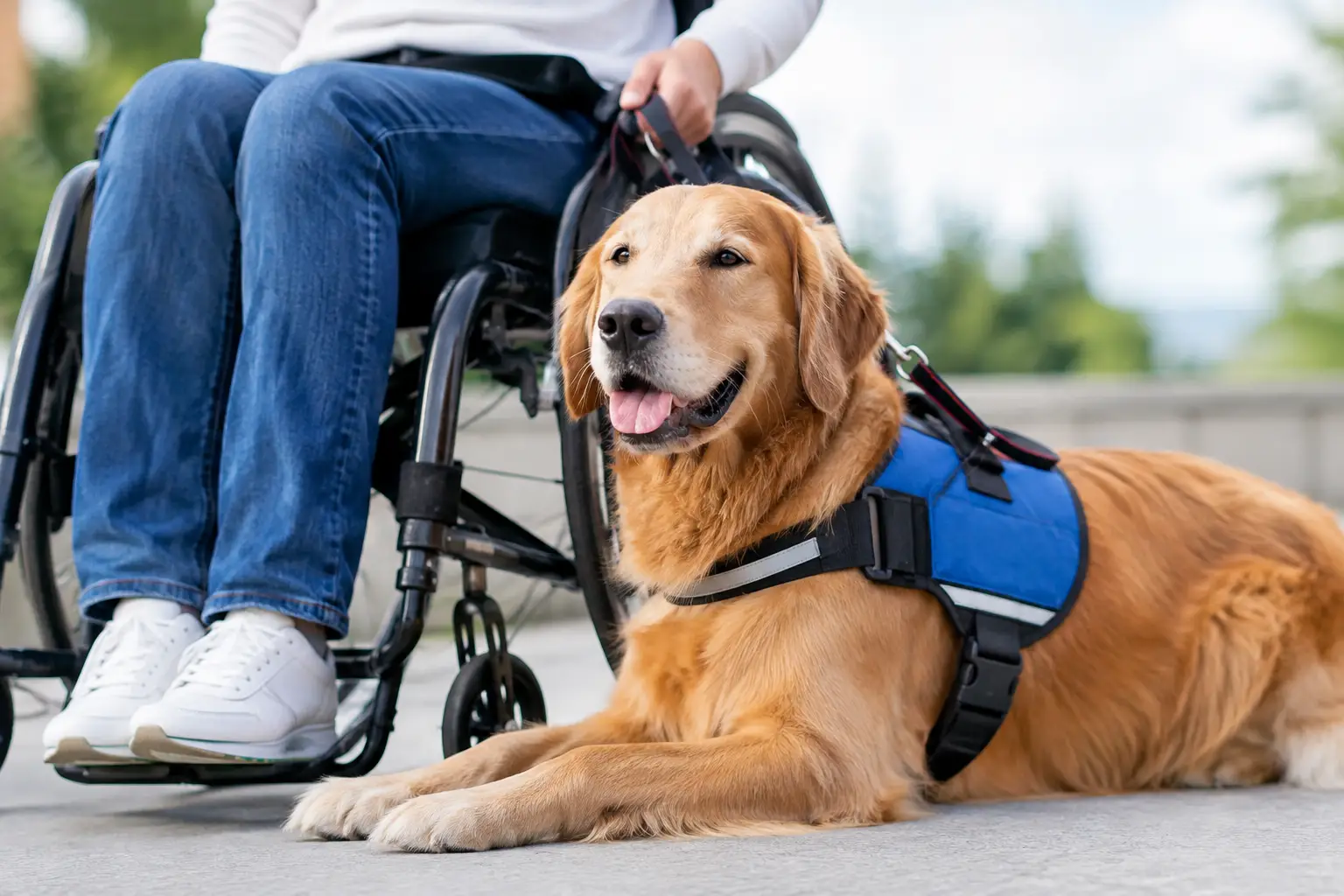
No. The ADA does not require a vest, harness, patch, tag, or ID card. Some handlers use these items because they make a working dog easier to identify, while others choose not to. The dog’s individualized task training and appropriate public behavior are what matter.
Can I register an emotional support animal as a service dog?
Not unless the dog has been individually trained to perform specific work or tasks directly related to a disability. A pet or emotional support animal without task-specific service-dog training does not qualify as a service animal under the ADA.
Is registration useful if it is not legally required?
It can be, depending on your preferences. Registration may give you an organized record and portable identification materials that are easy to access. It is optional, and its purpose is administrative convenience rather than establishing ADA rights.
Your service dog’s training and your day-to-day partnership come first. If organized documentation would make your routine feel more prepared, choose a process that is clear, accurate, and honest about what private registration can and cannot do.
Comments