How Service Dog Registration Tags Help Handlers
A service dog may be working quietly at your side while you manage a store visit, an appointment, or a trip away from home. In those moments, service dog registration tags can provide a simple, visible identification reference without requiring you to search through a phone, wallet, or bag for supporting information. A well-organized tag is not a legal pass, but it can make everyday interactions feel more prepared and manageable.
What service dog registration tags are for
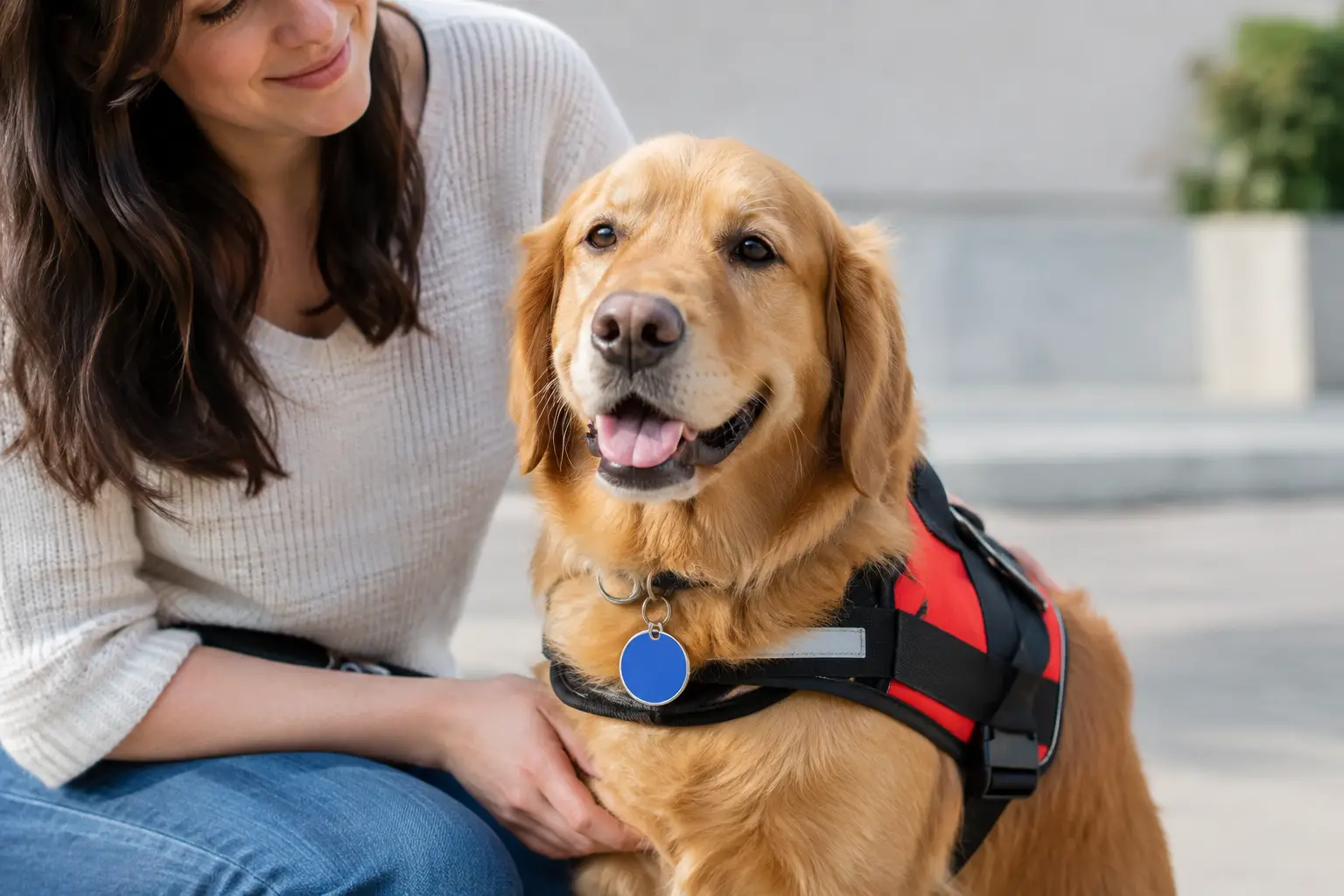
Registration tags are identification materials issued as part of a private, voluntary service dog registration package. They are typically attached to a collar, harness, or vest so the dog can be readily identified as a working service dog. Depending on the registration provider, the tag may include the dog's name, a registration number, and contact information associated with the registration record.
Their practical purpose is convenience. A tag creates a quick reference that can accompany the dog during routine errands, travel, appointments, and other public activities. When paired with an ID card and an organized registration record, it gives the handler a consistent way to keep key details together.
Just as important is what a tag does not do. Under the Americans with Disabilities Act, or ADA, service dog registration, certification, ID cards, vests, and tags are not required for public access. A private registration tag does not determine whether a dog qualifies as a service animal and does not grant ADA access rights. Those rights depend on whether the dog is individually trained to perform work or tasks directly related to a person's disability.
A visible, convenient reference
A tag can reduce the small administrative burdens that add up during a busy day. Instead of relying on a loose paper record or trying to remember where an ID card was placed, handlers have an identification reference attached to the dog. This can be especially useful when a dog wears different working gear for different settings, as long as the tag is securely transferred when needed.
The best approach is to view the tag as one part of an organized system. The exterior tag offers a quick point of identification, while the registration record can hold more complete information about the handler, dog, and trained disability-related work or tasks.
A privacy-conscious option
A tag should identify, not disclose. Most handlers do not want personal medical details displayed on a dog's collar or harness, and they should not have to share them. Keep exterior information limited to useful identifiers, such as the dog's name, a registration number, and an appropriate contact method.
Detailed information about a disability or trained tasks belongs in a private record, not on a tag visible to everyone nearby. This distinction helps handlers remain prepared while maintaining control over sensitive information.
A durable everyday item
Because tags are exposed to rain, movement, cleaning, and regular wear, legibility matters. A tag that is difficult to read after a few months is less useful as an identification reference. Check it periodically for worn engraving, damaged attachment rings, or outdated contact details.
Consider the dog's size and working equipment, too. A large, heavy tag may be uncomfortable on a smaller dog, while a very small tag may be difficult to read. The right choice is usually durable, easy to read, and secure enough for daily use without creating unnecessary bulk.
What to include on a registration tag
There is no single federally required format for a service dog tag. The most useful information depends on the registration package and the handler's preferences. Generally, a clear registration number and basic identification details are more helpful than a crowded tag filled with unnecessary text.
Avoid adding medical diagnoses, full home addresses, or anything else you would not want visible to strangers. If the tag includes a phone number, consider whether it is a number you are comfortable making publicly available. Some handlers use a dedicated contact number rather than a personal primary number.
A tag should also be accurate. If your phone number changes, your dog's name is updated, or details in the registration record need correction, update the record and identification materials promptly. Organized documentation only works when it reflects current information.
A simple way to organize your registration materials
For handlers of task-trained service dogs, the registration process should not become another complicated project. Alpha Service Dog Registration uses an online inquiry followed by an in-home visit or video call to collect the required information and complete qualifying registrations the same day.
The process is designed to create one accessible record rather than leave important details scattered across forms, emails, and personal notes.
1. Start with the dog's trained work or tasks. Document the specific work or tasks the dog has been individually trained to perform in relation to the handler's disability. Comfort alone, companionship, or emotional support without task-specific training does not meet the ADA definition of a service dog.
2. Confirm the handler and dog information. Review names, contact details, the dog's identifying details, and any information needed for the private registration record. Taking a moment to verify spelling and contact information helps prevent avoidable corrections later.
3. Complete the review remotely or at home. An in-home visit or video call allows the required information to be collected without adding an unnecessary trip or lengthy process. This can be a practical option for handlers who value privacy and convenience.
4. Keep the finished materials together. Once registration is complete, store the ID card and any supporting registration information in a consistent place. Attach the registration tag securely to the dog's usual working collar, harness, or vest, and check it before travel or extended outings.
When a tag may help and when it may not
A registration tag may help make a working dog's role easier to recognize in everyday settings. It can also give the handler an easy reference point when managing travel, routine errands, or unfamiliar environments. But it cannot replace training, good public behavior, or an understanding of ADA rules.
It may not change every interaction. Businesses covered by the ADA generally may ask only whether the dog is required because of a disability and what work or task the dog has been trained to perform. They cannot require registration paperwork or demand that a dog show a tag as a condition of access. A calm, task-trained dog and a handler who understands these boundaries remain the foundation.
Tags are also not appropriate for every animal. Pets and emotional support animals that have not been individually trained to perform disability-related work or tasks should not be represented as service dogs. Clear eligibility standards protect handlers with legitimate service dogs and keep private documentation honest.
Common questions about service dog registration tags
Do I need a tag for my service dog?
No. The ADA does not require a service dog to wear a tag, vest, ID card, or other identification. A tag is a voluntary convenience item for handlers who want a portable identification reference as part of an organized private registration package.
Does a registration tag prove ADA access rights?
No. A private registration tag does not certify a dog, establish legal status, or guarantee access. ADA access depends on the dog's individual training to perform work or tasks related to a person's disability and on the dog being under control in the setting.
Should I put my disability or task details on the tag?
Usually, no. Keep the tag simple and privacy-conscious. Detailed information about the dog's trained tasks can be maintained in the private registration record instead of displayed publicly.
Before your next outing, take a minute to inspect the tag, confirm your contact information, and make sure your registration materials are easy to locate. That small check can support a more prepared, confident day with your service dog.
Comments