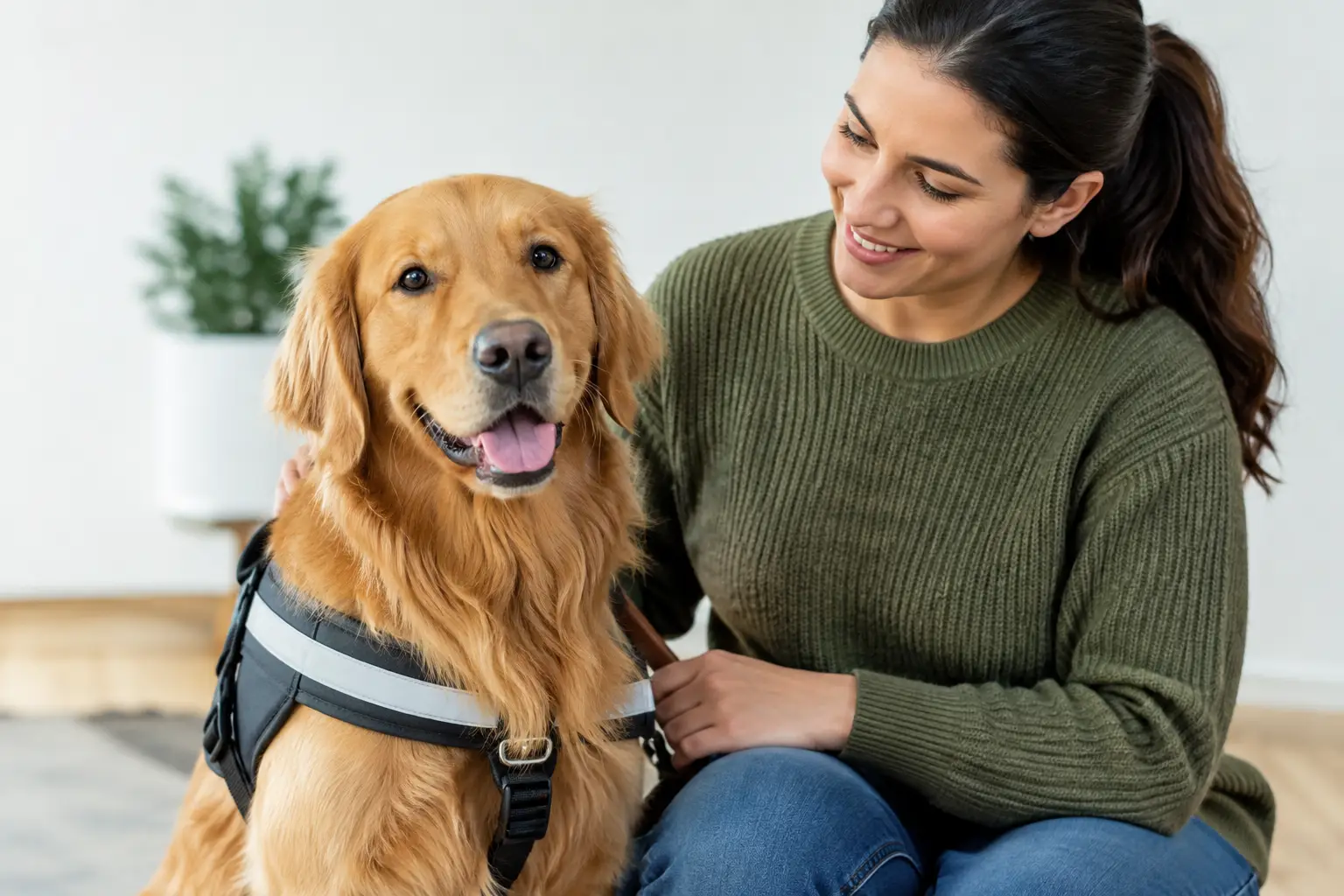
What a Private Service Dog Registry Provides
A private service dog registry can give a handler one organized place to keep key information about a task-trained service dog. For people who travel, attend appointments, visit public places, or simply manage a busy daily routine with a service dog, having a portable reference can feel practical and reassuring. The purpose is organization and convenient identification - not creating legal access rights.
That distinction matters. Under the Americans with Disabilities Act (ADA), service dogs are not required to be registered, certified, or carry an ID card. A private registration does not decide whether a dog is a service animal under the ADA, and it cannot guarantee entry to a business, housing provider, airline, or public setting. What it can do is help a qualified handler maintain a clear record of the dog and the disability-related tasks the dog has been trained to perform.
What Is a Private Service Dog Registry?
A private service dog registry is a voluntary documentation service operated by a private company, not a government agency. It typically creates a record with the handler's information, the dog's identifying details, and a description of the specific work or tasks the dog performs for the handler's disability.
Depending on the provider, registration materials may also include an ID card, registration tags, and a copy of the organized record. These materials are intended as an easy reference for the handler. They are not proof that a dog has been legally certified, because the ADA does not issue an official federal certification or registration for service dogs.
For a handler, the value is often straightforward: important information is gathered in one place rather than spread across training notes, veterinary files, photographs, and personal records. That can make it easier to keep identification materials current and available when they are useful.
Who May Benefit From Private Registration?
Private registration is designed for handlers with dogs that have been individually trained to perform work or tasks directly related to a disability. The training must be task-specific. A dog that provides comfort through its presence alone, without trained disability-related tasks, does not meet the ADA definition of a service animal.
For example, a service dog may be trained to alert a handler to an oncoming seizure, retrieve medication, guide a person with low vision, interrupt a harmful behavior, provide balance support, or alert to a significant change in blood sugar. The relevant question is not the dog's breed, vest, or registration status. It is whether the dog has been trained to take a specific action that helps mitigate the handler's disability.
Newer handlers may appreciate having a structured process for recording the dog's trained tasks and identifying details. Experienced handlers may value the convenience of replacing worn materials, updating information after a move, or carrying a concise reference while traveling. The right fit depends on the handler's needs and whether the dog is already appropriately task-trained.
What a Private Service Dog Registry Can Provide
The strongest reason to use a registry is administrative convenience. A well-organized record can reduce the burden of trying to remember where a dog's basic information, handler information, and trained-task description are stored.
A registration package may provide three useful forms of support. First, it creates a consolidated record that identifies the handler and dog and documents the dog's trained disability-related work or tasks. Second, it can provide physical ID materials, such as a card and tags, for convenient identification. Third, it gives the handler a consistent reference that can be kept with travel documents, emergency information, or other personal records.
These materials may help a handler communicate clearly in everyday situations, but they should never be presented as a substitute for the dog's training or the handler's rights under applicable law. A card or tag may be useful for identification, yet it does not change the legal standard for service-animal access.
A useful reference, not a required credential
Businesses covered by the ADA generally may ask only two questions when it is not obvious what service an animal provides: whether the dog is required because of a disability and what work or task the dog has been trained to perform. They cannot require a handler to show registration paperwork as a condition of entry.
This is one reason transparency is essential. A private registry should explain plainly that registration is voluntary and that ADA access depends on the dog meeting the ADA definition of a service animal and behaving appropriately in the setting. A dog may be asked to leave if it is out of control or not housebroken, even if it is task-trained.
How the Registration Process Usually Works
A responsible private registry should make the process manageable while collecting enough information to create an accurate record. Alpha Service Dog Registration uses an online inquiry followed by an in-home visit or video call, allowing qualifying registrations to be completed the same day after required information is collected.
While details differ by provider, the process commonly follows these steps:
1. Start with an inquiry. The handler shares basic information about themselves and their dog, along with the reason they are seeking private documentation.
2. Confirm eligibility information. The registry reviews whether the dog is individually trained to perform disability-related work or tasks. Pets and emotional support animals without task-specific training should not be registered as service dogs.
3. Review the dog and handler details. This may include the dog's name, breed or description, age, photo, handler contact details, and a clear description of the trained work or tasks.
4. Complete the record and materials. Once the information is collected and reviewed, the provider prepares the registration record and any included ID card or tags.
The best process is one that feels organized without asking handlers to make exaggerated claims about their dog. Accuracy protects the handler and supports a clearer public understanding of what a service dog is.
Choosing a Registry With Clear Boundaries
Not all registration services communicate their role responsibly. Be cautious of any provider that promises to make a dog legally recognized, guarantees access everywhere, or claims to sell an official ADA certificate. Those statements can create confusion because no federal ADA registry or required national certification exists.
Instead, look for a provider that explains its service in practical terms. It should clearly state that the registry is private and voluntary, explain that its materials are for documentation and identification, and screen out dogs that are not task-trained service dogs. A provider should also make its process understandable before asking for payment or personal information.
Privacy is another reasonable consideration. A registration record may contain sensitive details about a handler and disability-related assistance. Before enrolling, ask what information will be collected, how it will be used, whether it will appear on any physical materials, and how updates or corrections are handled. A useful record should support the handler's preparedness without requiring unnecessary disclosure.
Common Questions About Private Registration
Does a private registry make my dog a service dog?
No. A private registry does not train, certify, or legally designate a dog as a service animal. Under the ADA, a service dog is a dog individually trained to do work or perform tasks for the benefit of a person with a disability.
Is registration required to bring my service dog into public places?
No. The ADA does not require service-dog registration, certification, ID cards, vests, or tags for public-access rights. Voluntary registration can still be useful as an organized personal reference.
Can an emotional support animal be registered as a service dog?
Not if the animal has not been individually trained to perform specific disability-related work or tasks. Emotional support alone does not meet the ADA service-dog definition.
Should I carry my registration materials everywhere?
That is a personal choice. Some handlers prefer to keep an ID card or record with travel and medical documents for convenience. Others may only use those materials as a backup reference. Either way, the dog's training, behavior, and legitimate disability-related tasks remain the foundation of service-dog status.
A private registry works best when it is treated for what it is: a simple, organized way to keep important service-dog information accessible. If your dog is task-trained to assist with a disability, accurate documentation can be one more practical tool that helps you feel prepared for the places your day takes you.
Comments