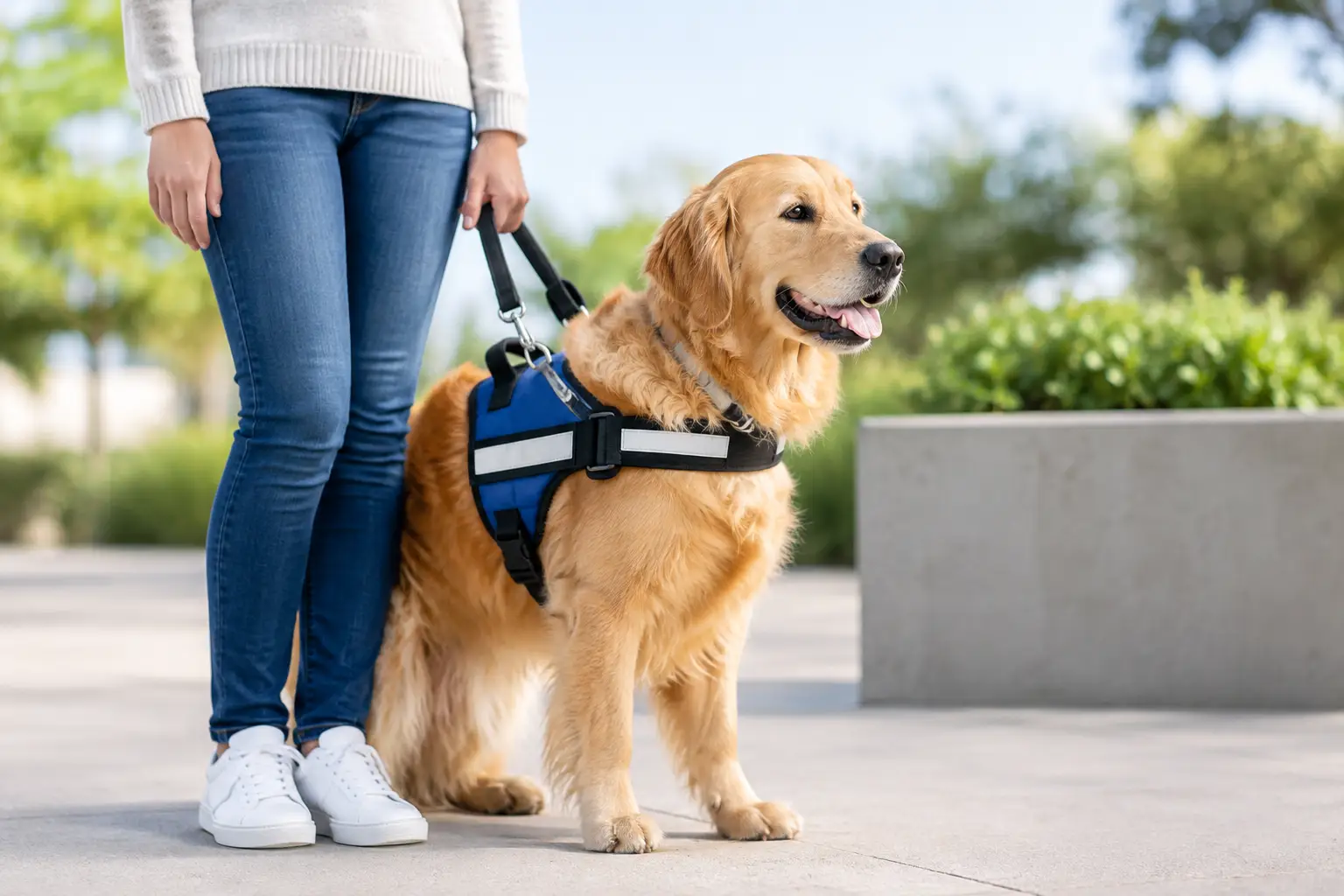
A Practical Guide to Service Dog Identification
A service dog may perform life-changing work without wearing a vest, ID card, tag, or special harness. Still, service dog identification can be a practical way to keep essential information organized and readily available when you are out in public, traveling, or managing daily activities. The key is understanding what identification can help with and what it cannot do.
For handlers of task-trained service dogs, a clear identification reference may reduce avoidable confusion and make it easier to communicate basic information when needed. It does not replace good training, appropriate behavior, or the legal standards that apply to service animals.
What Service Dog Identification Is
Service dog identification generally refers to materials that help identify a working dog and connect the dog to key handler information. Depending on the documentation provider, this may include an ID card, registration tags, a written record of the dog’s details, and a description of the disability-related work or tasks the dog has been trained to perform.
For many handlers, the value is administrative. A consolidated record keeps information in one place rather than scattered among training notes, veterinary paperwork, photographs, and personal files. An ID card or tag can also provide a convenient visual reference during routine outings.
Identification materials can be especially useful when a handler wants a simple way to present the dog as a working service dog without carrying a large folder of documents. However, the materials should always be presented accurately: they are private documentation and identification tools, not government-issued proof of access rights.
What Identification Does Not Do Under the ADA
The Americans with Disabilities Act does not require service dogs to be registered, certified, licensed as service animals, or equipped with special identification. A business generally cannot require a handler to show an ID card, registration certificate, vest, or task-training documentation as a condition of entry.
Under the ADA, a service animal is a dog individually trained to do work or perform tasks for the benefit of a person with a disability. The work or tasks must be directly related to the person’s disability. Examples may include guiding a person who is blind, alerting a person who is deaf, retrieving medication, interrupting certain medical episodes, providing mobility support when appropriately trained, or assisting during psychiatric disabilities through specific trained tasks.
When the service an animal provides is not obvious, staff may generally ask two limited questions: whether the dog is required because of a disability and what work or task the dog has been trained to perform. They may not ask about the handler’s diagnosis, demand medical records, require a demonstration of the task, or insist on registration paperwork.
That distinction matters. A private registration can offer an easy reference, but it does not grant ADA access, determine whether a dog qualifies under the ADA, or override a business’s ability to address a dog that is out of control or not housebroken. Access is based on the dog’s training, the handler’s disability-related need, and the circumstances of the situation.
Why Handlers Still Choose Service Dog Identification
A voluntary identification package is not about obtaining rights that do not already exist. It is about organization, convenience, and preparedness.
First, it creates a single, portable record. When key details are gathered in one place, handlers can keep a consistent reference for the dog’s name, breed or description, handler information, trained tasks, and registration details. This can be helpful for people who prefer a structured file rather than relying on memory or loose paperwork.
Second, identification can support clearer everyday communication. Not every interaction requires an explanation, and handlers are not obligated to disclose private medical details. Yet an ID card or tag can provide a simple visual signal that a dog is working, which may reduce casual questions or interruptions in some settings.
Third, it can make travel and transitions easier to manage. A handler may appreciate having a readily accessible record when preparing for a hotel stay, a move, a new workplace conversation, or an extended trip. Different settings may follow different rules, so identification is not a substitute for checking applicable policies. It can, however, help keep your own information organized before you go.
Choosing Identification That Reflects Your Dog’s Training
The most useful service dog identification is accurate, current, and limited to dogs that are genuinely task-trained for a disability. Emotional support, comfort, companionship, and therapeutic benefit can be meaningful, but those benefits alone do not meet the ADA definition of a service animal. A dog must be individually trained to perform specific disability-related work or tasks.
Before pursuing private documentation, make sure you can describe your dog’s trained tasks in straightforward language. You do not need to disclose a diagnosis to the public. For your own record, though, it is helpful to document the connection between the dog’s trained work and your disability-related needs clearly and truthfully.
Accuracy protects both handlers and the public. Misrepresenting a pet as a service dog can create access problems, place strain on legitimate working teams, and may violate state or local laws. A reputable documentation process should distinguish task-trained service dogs from pets and emotional support animals that have not received task-specific training.
A Simple Way to Organize Your Information
An organized process should feel manageable, not burdensome. The goal is to collect the details you may reasonably want available, verify that the information is complete, and keep the finished materials where they can be accessed when needed.
1. Gather the basics. Start with the handler’s contact information, the dog’s identifying details, current photo, and a concise description of trained disability-related tasks. Keep the wording factual and specific.
2. Review eligibility honestly. Confirm that your dog is individually trained to perform work or tasks related to a disability. This is the foundation of any accurate service dog record.
3. Complete the registration review. A private provider may collect the necessary information through an inquiry and a remote video call or in-home visit. Alpha Service Dog Registration completes qualifying registrations the same day after the required information is collected.
4. Keep your materials accessible. Store the ID card and tags where they are useful to you, and maintain a copy of your registration record with other important personal documents. Update it if your contact information changes or if you replace a lost card or tag.
A process like this can give you a convenient reference without asking you to carry unnecessary medical information. It also keeps the focus where it belongs: your dog’s actual training and your practical needs as a handler.
Identification Is Only One Part of Public Access Readiness
Even the clearest ID card cannot compensate for behavior that creates a disruption. A service dog should be under the handler’s control, housebroken, and able to work safely in the setting. In most circumstances, that means the dog is leashed, harnessed, or tethered unless those devices interfere with the dog’s work or the handler’s disability prevents their use.
Public-access readiness also requires realistic judgment. A dog may be task-trained and still need more practice in a busy restaurant, crowded airport, medical office, or unfamiliar hotel. Preparing for those environments includes managing the dog’s exercise, bathroom breaks, rest, food, and ability to settle quietly.
It is also wise to remember that ADA public-access rules are not the only rules a handler may encounter. Housing, employment, air travel, schools, and state or local laws can involve separate standards or procedures. Identification may be useful as an organized personal reference in these situations, but it does not replace the requirements that apply to each setting.
Frequently Asked Questions About Service Dog Identification
Do service dogs have to wear an ID card or vest?
No. The ADA does not require a service dog to wear a vest, patch, tag, or ID card. Some handlers choose these items because they are convenient or help signal that the dog is working, but they are voluntary.
Can a business require my registration paperwork?
Generally, no. Businesses covered by the ADA cannot require service dog registration documents or certification as a condition of allowing a qualifying service animal to accompany its handler. They may ask the two limited ADA questions when the dog’s role is not obvious.
Is an emotional support animal eligible for service dog identification?
Not as a service dog based on emotional support alone. To qualify as a service dog, a dog must be individually trained to perform specific work or tasks directly related to a person’s disability.
What should I keep in my service dog record?
Keep accurate handler and dog details, a current photo, a description of the dog’s trained tasks, and any private registration materials you choose to obtain. Avoid carrying more personal medical information than you are comfortable sharing.
A well-organized identification record will not define your rights, but it can make everyday preparation feel more straightforward. Choose materials that accurately reflect your service dog’s training, keep them current, and let your dog’s reliable work speak for itself.
Comments