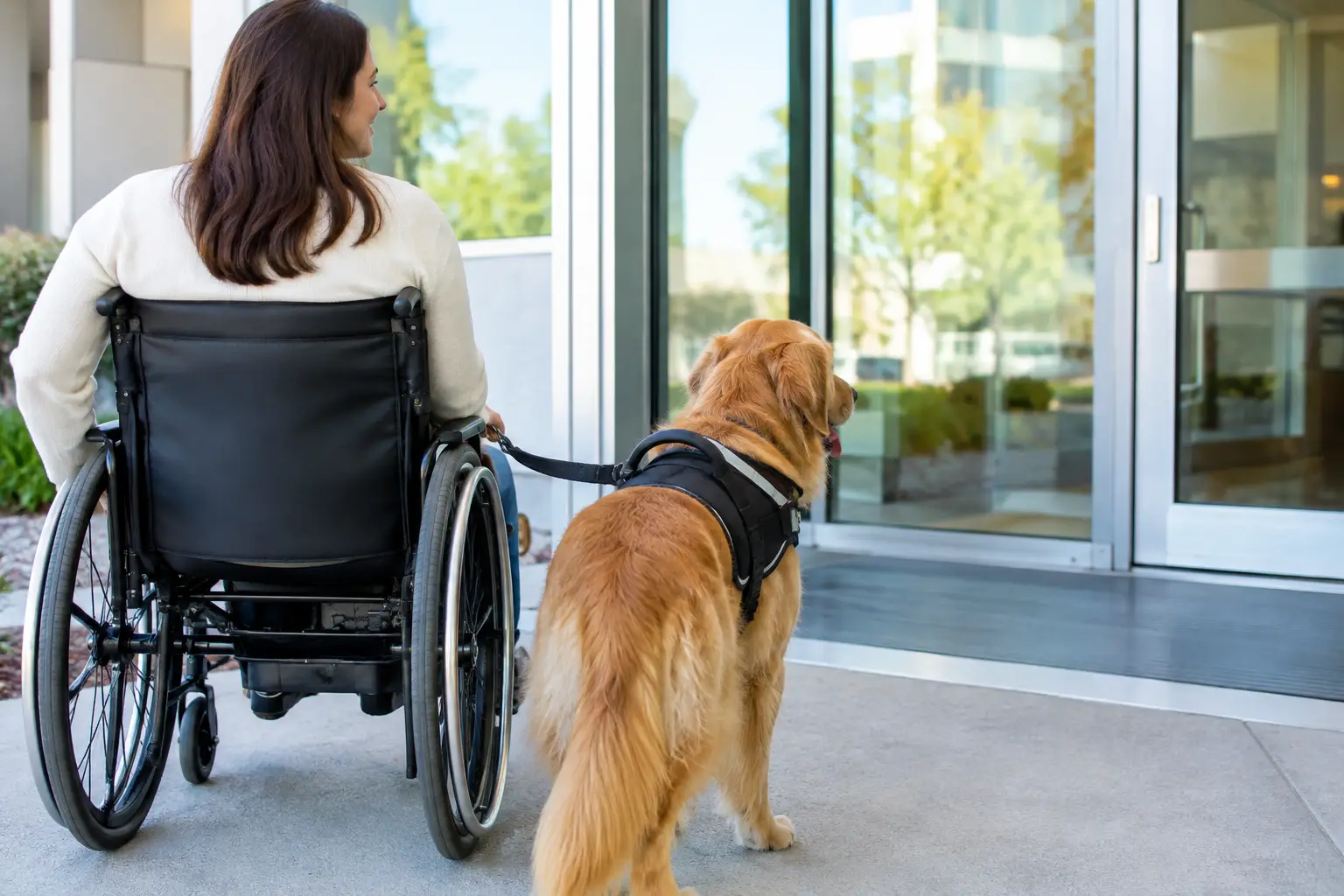
ADA Public Access Guide for Service Dog Handlers
A grocery store employee pauses at the entrance and asks for service dog papers. A hotel clerk points to a no-pets policy. These moments can feel stressful, especially when you are simply trying to go about your day with a task-trained service dog. This ADA public access guide explains the basic rules, your responsibilities as a handler, and how organized records can help you feel prepared without confusing private documentation with legal access rights.
What ADA Public Access Means
Under the Americans with Disabilities Act, a service animal is generally a dog individually trained to do work or perform tasks for the benefit of a person with a disability. The task must be directly related to the person’s disability. Examples can include guiding a person who is blind, alerting to sounds, retrieving medication or a phone, providing mobility support, interrupting certain psychiatric symptoms, or alerting to changes in a medical condition.
Public access generally applies to places open to the public, such as stores, restaurants, hotels, theaters, medical offices, and many other businesses. It also applies to many programs and services offered by state and local governments. A business that normally prohibits pets must generally make reasonable modifications to allow a qualifying service dog to accompany its handler.
The ADA does not require a service dog to wear a vest, carry an ID card, be registered, or hold a government-issued certification. There is no federal ADA registry or official federal service dog certification. A private registration record may be useful as a convenient personal reference, but it does not create ADA rights, prove eligibility, or replace the legal standard.
The Two Questions a Business May Ask
When a disability or the dog’s service is not obvious, staff at a covered business may ask only two questions:
1. Is the dog required because of a disability?
2. What work or task has the dog been trained to perform?
They may not require medical documentation, ask about the nature of your disability, demand a demonstration of the task, or require registration paperwork as a condition of entry. They also may not charge a pet fee for a service dog, although handlers can be charged for actual damage caused by the animal if other customers would be charged for similar damage.
A concise answer is usually best. You do not need to disclose your diagnosis or provide a long explanation. For example: “Yes, this is my service dog. He is trained to alert me to a medical change and retrieve help.” Clear, factual communication often keeps an ordinary interaction from becoming a difficult one.
What employees may not ask
Staff may not ask for an ID card, training certificate, vest, registration number, or a letter from a doctor. They cannot insist that a service dog display a particular patch or identification tag. Businesses sometimes ask for these items because they are unfamiliar with the ADA, not necessarily because they intend to deny access. Calmly stating the two-question rule can be helpful.
That said, choosing to carry organized information is different from being required to show it. Some handlers appreciate having an easy reference that contains their contact details, the dog’s identifying information, and a description of trained disability-related tasks. It can support a more prepared conversation, but it remains voluntary private documentation.
Public Access Comes With Handler Responsibilities
ADA access is not a blanket exception to every rule. A service dog must be under the handler’s control. In most situations, this means the dog should be leashed, harnessed, or tethered. If a tether would interfere with the dog’s work or the handler’s disability prevents its use, the handler must maintain control through voice commands, signals, or another effective method.
The dog must also be housebroken and behave appropriately for the setting. A business may ask that a service dog be removed if the dog is out of control and the handler does not take effective action, or if the dog is not housebroken. If this occurs, the business must still offer the person the opportunity to obtain goods or services without the animal present.
A service dog does not need to be perfectly still at every moment. A dog may reposition, check on its handler, or perform a trained task. The key question is whether the dog is controlled and whether its behavior is creating a legitimate disruption. Barking repeatedly, lunging, roaming, or interfering with other patrons can change the situation quickly.
Know Where Different Rules Apply
The ADA public-access rules are highly useful, but not every setting is governed by the same law. Housing, air travel, employment, schools, and federal facilities can involve different requirements. For example, emotional support animals may have protections in certain housing circumstances, but they are not service animals under the ADA unless they are individually trained to perform qualifying disability-related work or tasks.
This distinction matters because emotional support alone, companionship, comfort, and the deterrent effect of an animal’s presence do not meet the ADA definition of a trained task. A dog can provide genuine emotional benefit and still not qualify as an ADA service dog.
State and local laws may provide additional protections or use slightly different language. They may also address service dogs in training. For a situation involving a denial of access, a local disability-rights organization, government agency, or qualified attorney can help you understand the rules that apply to your location and circumstances.
A Practical Way to Prepare for Everyday Outings
Preparation is not about carrying paperwork to “prove” your rights. It is about reducing avoidable stress and keeping essential information available when you need it. Before heading into a new public setting, consider whether your dog is ready for the environment. A crowded restaurant, long medical appointment, airport terminal, and quiet library all ask for different skills from a working dog.
Keep your dog’s routine care current, including grooming and bathroom breaks. Bring water when an outing may be lengthy, and plan for your dog’s ability to rest quietly. If a location has a security process, arrive with enough time to explain that the dog is a service dog and to follow reasonable screening procedures without separating from your dog’s needed assistance.
It can also help to keep your information in one place. A voluntary private registration package from Alpha Service Dog Registration can create an organized record of handler and dog details, trained tasks, an ID card, and registration tags. The process is designed to be completed through an inquiry followed by an in-home visit or video call, with qualifying registrations completed the same day. This documentation is a convenient identification reference only. It does not certify a dog, establish disability status, or grant ADA public-access rights.
If You Are Questioned or Denied Access
Start by keeping the exchange brief and calm. You can state that your dog is a trained service dog required because of a disability and identify the task in general terms. If an employee requests certification or medical information, explain that the ADA permits only the two questions described above.
If the issue continues, ask to speak with a manager. Avoid escalating the interaction if you can safely leave and address the concern later. Write down the date, time, location, names of staff involved, and what was said. Those details can be useful if you decide to file a complaint or request further guidance.
There are situations where a business may legitimately focus on behavior rather than documentation. If your dog is ill, having an accident, repeatedly barking, or unable to settle, the best choice may be to leave, regroup, and continue training before returning to a similarly demanding environment. Protecting access includes maintaining the high standard of conduct the public should expect from working service dogs.
A Clear Record Supports a More Confident Routine
The strongest foundation for public access is a dog that is individually task-trained, under control, and needed because of a disability. No card, tag, vest, online certificate, or registry can substitute for those facts.
Still, organization has value. Keeping your service dog’s information current and readily available can make travel, appointments, and everyday errands feel more manageable. Bring what helps you stay prepared, know the limits of what documentation means, and let your dog’s training and behavior speak clearly in public.
Comments