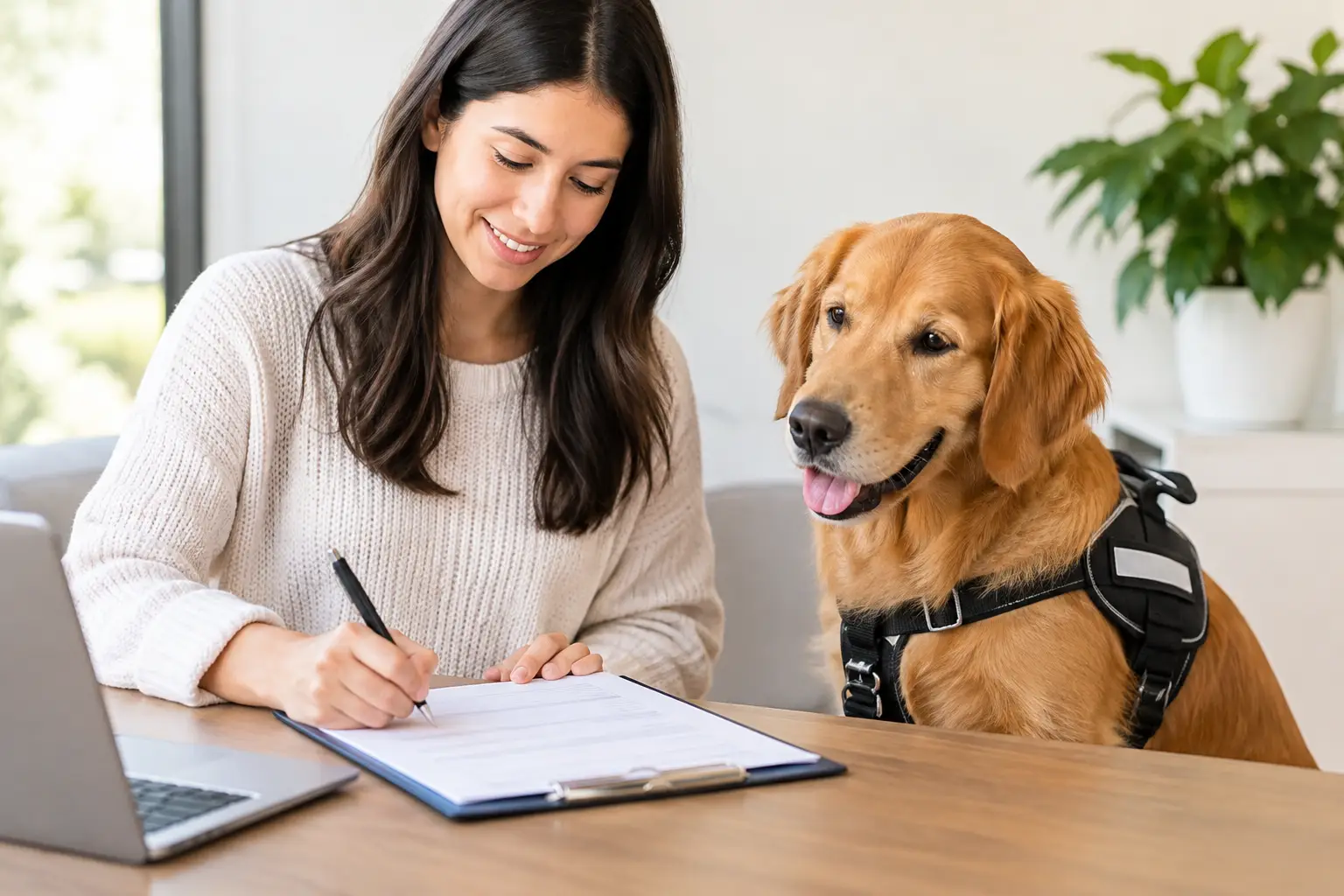
How to Apply for a Service Dog License in the US
A search for how to apply for service dog license can make the process sound more official and complicated than it is. In the United States, there is no federal service dog license, certification, or registration that a handler must obtain for ADA public access. If your dog is individually trained to perform work or tasks related to your disability, the focus is on the dog’s training and your need for that work - not on a government-issued card or license.
That said, many handlers still choose voluntary private registration as a convenient way to keep their dog’s identifying details, task information, and handler information organized in one place. The key is understanding what registration can do for you, and what it cannot do.
Start With the ADA Definition of a Service Dog
Under the Americans with Disabilities Act, a service dog is a dog that has been individually trained to do work or perform tasks for a person with a disability. The task must be directly related to the person’s disability.
For example, a dog may alert a handler to a medical change, retrieve medication or dropped items, provide balance support, interrupt harmful behaviors, guide a person with low vision, or alert a person who is deaf to sounds. These are task-specific actions. Comfort, companionship, and emotional support alone do not meet the ADA definition of service-dog work.
This distinction matters before you begin any documentation process. A private registry should be used for a task-trained service dog, not a pet or an emotional support animal that has not been trained to perform disability-related work or tasks.
Is a Service Dog License Required?
No. The ADA does not require handlers to carry a license, certification, registration number, ID card, vest, or doctor’s letter for a service dog to enter public places covered by the law. A business cannot require you to show documentation as a condition of entry.
In most public-access situations, staff may ask only two questions: whether the dog is required because of a disability, and what work or task the dog has been trained to perform. They cannot ask about your diagnosis, request medical records, or demand a demonstration of the task.
State and local rules can vary in certain areas, particularly around service-dog-in-training programs, licensing rules that apply to all dogs, or specific housing and transportation matters. Your city or county may require a standard dog license, such as a rabies-related pet license, for every dog in the area. That is different from a service dog license.
Why Voluntary Registration Can Still Be Helpful
Private registration does not create ADA rights or prove that a dog qualifies as a service dog. It can, however, give a handler an organized, portable reference for everyday use.
When you are traveling, preparing for an appointment, updating emergency contacts, or keeping track of your dog’s details, it is useful to have key information together rather than spread across old paperwork, training notes, and phone photos. A clear record can also make it easier for a family member, caregiver, or trusted support person to locate essential details if needed.
A voluntary registration package may include the handler’s information, the dog’s identifying details, the disability-related work or tasks the dog performs, an ID card, and registration tags. These materials are for identification and personal organization. They are not a substitute for task training, good public behavior, vaccination requirements, or compliance with legitimate safety rules.
How to Apply for a Service Dog License Through Private Registration
Because there is no federal service dog license application, the practical process is applying for voluntary private registration. The exact steps depend on the provider, but a responsible process should begin with eligibility and accurate information.
1. Confirm that your dog is task-trained
Before applying, consider whether your dog has been individually trained to perform one or more specific tasks that mitigate your disability. Be prepared to describe those tasks clearly and truthfully. General statements such as “the dog helps with anxiety” are less useful than describing a trained action, such as interrupting escalating behavior, retrieving a phone during an episode, or providing a trained alert.
Your dog should also be under your control in public settings. Service dogs are expected to be housebroken and behave appropriately for the environment. Identification does not excuse disruptive, aggressive, or uncontrolled behavior.
2. Gather the details you want in your record
Having your information ready makes the process faster. You will generally need your name and contact details, along with your dog’s name, breed or type, age, color, sex, and photographs. You may also be asked for the dog’s trained work or tasks and basic veterinary or vaccination information, depending on the registration provider.
Keep the description of your dog’s work focused on function. You do not need to share more personal medical information than is necessary to explain the trained task. A well-organized record can be useful while still respecting your privacy.
3. Submit an inquiry with a private registration provider
A legitimate private registration provider should clearly explain that its service is voluntary and does not grant ADA access rights. Be cautious with any company that promises to make an untrained pet a service dog, guarantees access everywhere, or suggests that a purchased certificate replaces training.
At Alpha Service Dog Registration, handlers begin with an online inquiry. The purpose is to collect the information needed to determine whether the registration is appropriate for a task-trained service dog and to prepare the documentation record.
4. Complete the in-home visit or video call
Some documentation providers use an in-home visit or video call to review the information with you directly. This can be especially convenient when travel is difficult or when you prefer to complete the process from home.
Use this conversation to confirm that names, contact details, dog details, and task descriptions are accurate. Administrative records are only as useful as the information they contain. If your dog’s training changes later or your contact information changes, keep your personal records current.
5. Receive your registration materials
For qualifying registrations, some providers can complete the process the same day after the required information is collected. Your materials may include an organized registration record, identification card, and tags for easy reference.
Carry or use these items only as personal identification materials. If someone questions your service dog in a public setting, remember that a private ID card does not replace the ADA’s rules or give a business the right to request extra documentation. A calm, brief explanation of your dog’s trained task is often more useful than turning the interaction into a debate about paperwork.
Avoid Common Registration Mistakes
The biggest mistake is treating a registration purchase as service-dog training. A card, tag, vest, online certificate, or registry entry does not train a dog to mitigate a disability. If your dog is still learning, distractible around people and animals, or unable to perform a reliable disability-related task, training should come first.
Another mistake is confusing emotional support with service-dog work. Emotional support animals can be meaningful companions, but they do not receive ADA public-access rights unless they are also individually trained to perform qualifying tasks for a person with a disability.
Finally, do not assume that all settings follow the same rules. ADA public access, air travel, housing accommodations, employment, and state or local dog licensing can involve different standards. If you have a question about a particular situation, review the rules that apply to that setting rather than relying on a general registration document.
Questions Handlers Often Ask
Can I get a government service dog license?
There is no federal government license or mandatory national registry for service dogs. Some local governments issue ordinary dog licenses for all resident dogs, but those are not service-dog licenses and do not establish ADA status.
Does private registration make my dog a service dog?
No. A dog becomes a service dog through individual training to perform disability-related work or tasks for a person with a disability. Private registration documents information about an eligible, task-trained dog. It does not determine legal status or public-access rights.
Should I register my task-trained service dog?
It depends on your preferences. Registration is optional, but it can be a practical choice if you want an organized record and convenient identification materials. Handlers who value having key details in one accessible place may find it helpful for routine activities and travel preparation.
Your service dog’s training, health, and reliable behavior remain the foundation. When your documentation is accurate and your expectations are clear, voluntary registration can be a simple way to keep the practical details close at hand.
Comments