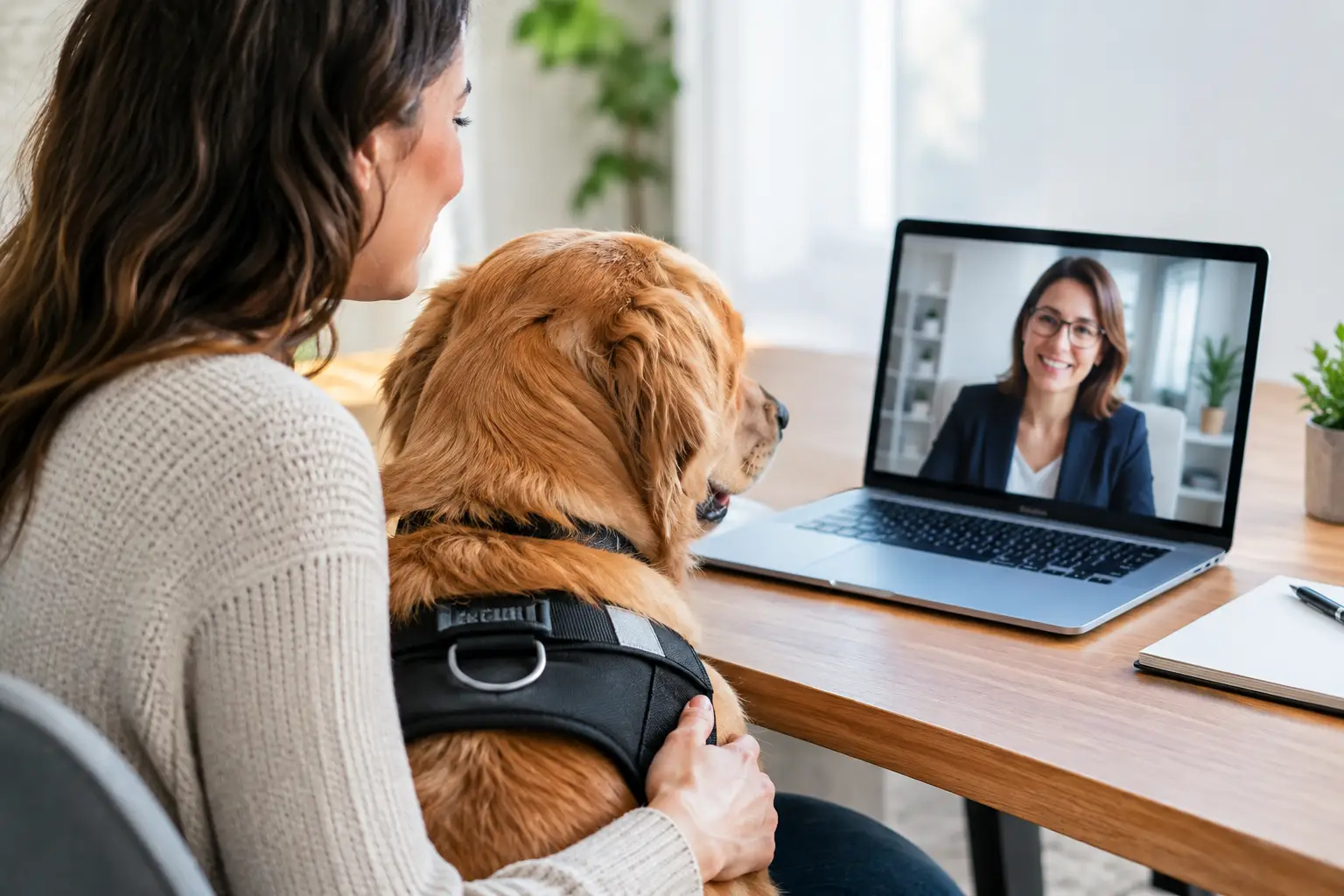
Service Dog Registration Video Call Made Simple
A service dog registration video call can turn scattered details about your dog, training, and daily support needs into one organized private record - without requiring you to travel to an office. For handlers who value preparation, a remote review offers a convenient way to discuss the information needed for voluntary registration from home.
The call is designed to be straightforward. You provide details about yourself, your dog, and the disability-related work or tasks your dog has been individually trained to perform. If the registration qualifies, the process can be completed the same day, creating a portable reference that can be easier to keep available during travel and everyday activities.
Why a video call can make registration easier
A service dog is often part of a carefully planned routine. Between appointments, work, errands, transportation, and travel, keeping key dog and handler information organized can make a practical difference. A private registration record gives you one place for identifying details and a clear description of the trained tasks your dog performs.
A video call removes the need to coordinate an in-home appointment when remote review is more comfortable or convenient. You can speak with a registration representative from a familiar setting, ask questions as they come up, and confirm that the information entered in your record is accurate.
For many handlers, the value is not a legal credential. It is the convenience of having an ID card, registration tags, and an easy-reference record tied to the information provided during registration. These materials may help you identify your working dog quickly in day-to-day situations, while keeping important details together.
What to have ready for your service dog registration video call
You do not need to prepare a complicated file before your call. Still, taking a few minutes to gather the basic details can make the conversation faster and more comfortable. Be ready to provide your name and contact information, along with your dog’s name, breed or type, age, and other identifying details requested during the registration process.
You should also be prepared to describe the specific work or tasks your dog has been individually trained to perform because of your disability. A task is an action the dog has been trained to take that is directly related to a person’s disability. Examples can include guiding a handler, alerting to a medical change, retrieving items, interrupting certain behaviors, or providing mobility-related assistance. The right description depends on your dog’s actual training and the support they provide.
Keep the explanation clear and factual. The goal is to document your trained service dog’s role, not to create a broad label or make claims that do not reflect the dog’s training.
How the video-call registration process works
Alpha Service Dog Registration begins with an online inquiry. Once your request is received, the registration review can be arranged through an in-home visit or a video call, depending on what works best for you.
1. Submit your inquiry
Start by providing the initial information requested for registration. This allows the team to understand your request and coordinate the next step. If a video call is the best fit, you can arrange a time to complete the review remotely.
2. Discuss your dog and trained tasks
During the call, you will review the handler and dog details needed for the registration record. You will also describe the disability-related work or tasks your dog is trained to perform. The review is meant to keep the record organized and accurate, not to test, train, or certify your dog.
It helps to answer based on your dog’s real, task-specific training. A dog that provides comfort simply by being present, without training to perform a particular disability-related task, does not meet the service dog standard used for this registration.
3. Confirm the registration information
Before the record is finalized, take a moment to verify spellings, contact details, and your dog’s identifying information. Small errors can make an ID card or tag less useful later. This is also the time to ask practical questions about the registration materials and how to keep your information available.
4. Receive same-day processing when qualified
Qualifying registrations can be completed the same day after the required information is collected. Your registration package creates an organized private record and includes identification materials such as an ID card and registration tags. Keep these materials with other important travel or personal records so they are easy to locate when you need them.
What private registration does and does not do
Clear expectations matter. Under the Americans with Disabilities Act, service dog registration is not required for a trained service dog to have public access rights. There is no official federal service dog registry, and a private registration does not grant, determine, or replace ADA access rights.
A video-call registration also does not evaluate whether a dog can behave appropriately in every public setting. Handlers remain responsible for their dog’s training, care, control, and conduct. Businesses and public entities may apply rules that are permitted under the ADA, and particular situations can involve facts that are best addressed with qualified legal or disability-rights guidance.
What voluntary private documentation can do is provide an organized reference for your own use. When your dog’s identifying details, trained tasks, ID card, and tags are maintained together, you have a convenient way to keep that information accessible. That can be particularly useful when you are packing for a trip, updating personal records, or simply want a consistent identification reference for your working dog.
Is a video call right for your situation?
A remote call is often a good option if getting to an appointment is difficult, if you prefer to handle administrative tasks at home, or if you want to complete the review without adding another trip to your schedule. It can also be helpful for handlers who want to talk through the process rather than submit information without guidance.
An in-home visit may be preferable if you are more comfortable speaking face to face or have questions that are easier to address in person. Both options are focused on collecting the required information for a private registration record. The better choice is the one that lets you communicate clearly and complete the process comfortably.
Common questions about service dog video-call registration
Do I have to register my service dog under the ADA?
No. The ADA does not require service dog registration, certification, an ID card, or registration tags. A private registration package is voluntary documentation and does not create ADA access rights.
Can emotional support animals be registered as service dogs?
No. Emotional support animals and pets that have not been individually trained to perform disability-related work or tasks are not eligible for service dog registration. Comfort or companionship alone is not a trained task under the ADA service dog definition.
Will the video call train or evaluate my dog?
No. The call is for registration information and documentation. It does not provide service dog training, behavioral testing, or a legal determination of your dog’s access rights.
What should I do after receiving my registration materials?
Review your ID card and tags for accuracy, keep your registration information in a safe place, and update your personal records if your contact details change. Most of all, continue prioritizing the training, care, and responsible handling that allow your service dog to do their work well.
A well-organized record cannot replace task training or responsible handling, but it can make one part of life with a service dog feel more manageable: keeping the information you rely on close at hand.
Comments