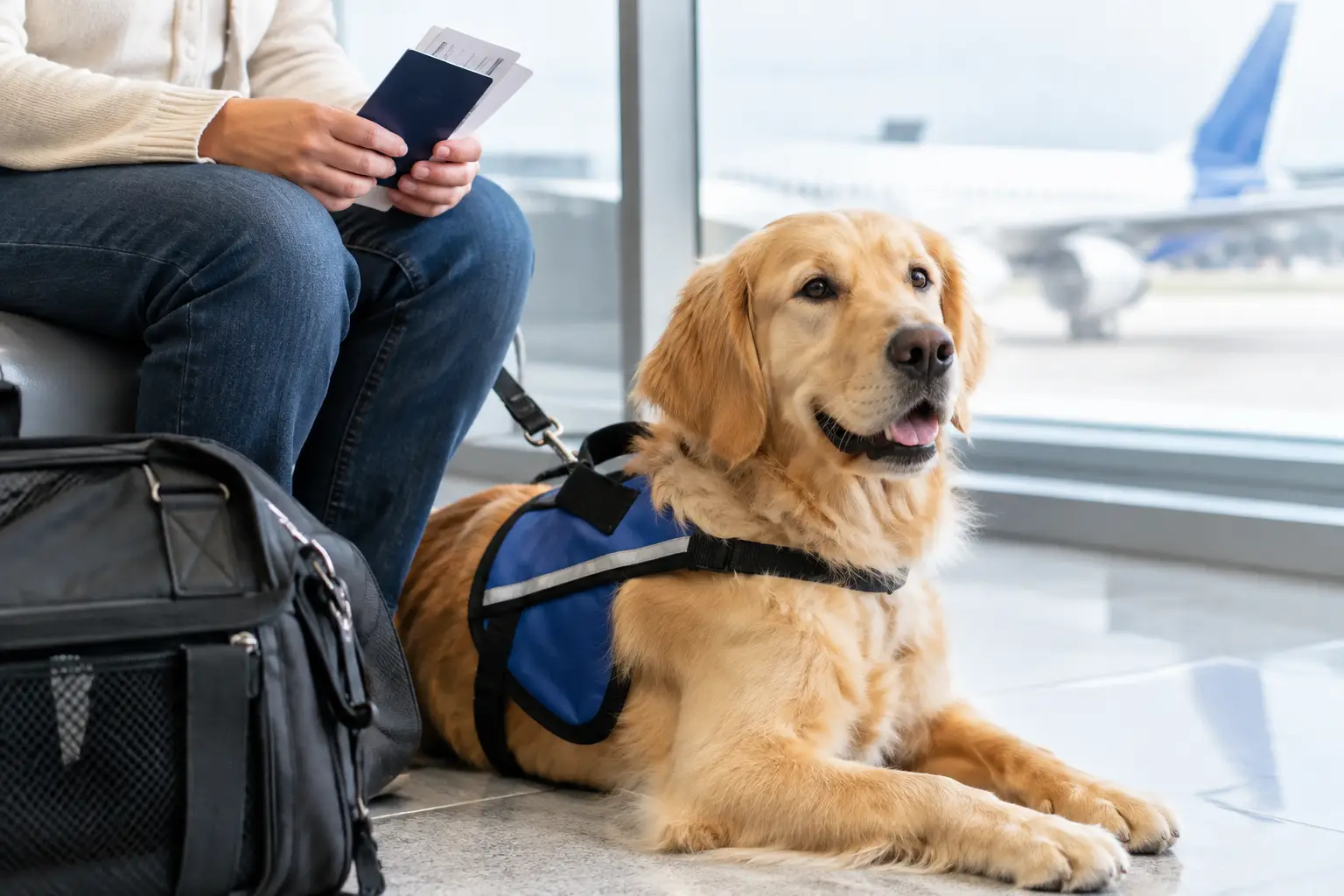
Service Dog Airline Paperwork Before You Fly
A missed form should not be the reason a carefully planned trip becomes stressful. For US flights, service dog airline paperwork is usually centered on the airline’s process for the US Department of Transportation service animal forms. Preparing those forms early gives you time to confirm requirements, correct any errors, and focus on your trip rather than an airport counter.
The key distinction is simple: airlines may require specific DOT forms for a task-trained service dog, but they cannot require a private registry, certificate, ID card, or vest as a condition of flying. A well-organized personal record can still be a convenient reference for you, especially when you travel often, but it does not replace the forms your airline requires.
Which Service Dog Airline Paperwork May Apply?
For most domestic travel, the primary document is the US DOT Service Animal Air Transportation Form. This form is used to provide information about you and your dog and to attest that the dog is trained to do work or perform tasks for the benefit of a person with a disability. It also addresses the dog’s health, vaccination status, and behavior in public settings.
If your scheduled flight is eight hours or longer, the airline may also require the US DOT Service Animal Relief Attestation Form. This form asks you to confirm that your dog can either avoid relieving itself during the flight or can do so in a sanitary way that does not create a health or safety concern.
These forms are different from a pet travel form. A service dog is not treated as a pet simply because you complete paperwork. At the same time, emotional support animals that have not been individually trained to perform disability-related work or tasks do not qualify as service animals under the DOT’s air travel rule.
Psychiatric service dogs can qualify when they are individually trained to perform tasks related to a person’s disability. Comfort alone, companionship, or emotional support without task-specific training is not enough for airline service animal status.
Prepare Your Information Before Starting the Forms
Airline forms are easier to complete when your information is already in one place. Before opening the airline’s submission page, have your flight confirmation available and review the dog’s current veterinary and vaccination details. Read each statement carefully. The forms are attestations, so accuracy matters.
You will commonly need details such as your contact information, flight itinerary, your dog’s name and breed or type, vaccination information, and the veterinarian’s contact details. The DOT form also asks you to confirm that your dog has been trained to behave appropriately in public and that you understand the airline may treat a dog as a pet or refuse transport if it poses a direct threat to health or safety, causes a significant disruption, or violates applicable safety requirements.
Keep the following records together in a travel folder on your phone or in a printed folder:
Your completed DOT service animal form and, when applicable, relief attestation form
Your flight confirmation and airline submission confirmation
Current vaccination and veterinary records
A backup copy of your handler and dog identification details
The airline’s required DOT forms should be your priority. Your vaccination record may be useful for your own preparation or for destinations with separate animal-entry rules, but it does not substitute for the airline form. Likewise, an ID card or registration record can help you keep identifying information accessible, yet it is not federal proof of service dog status.
For international trips, plan further ahead. Destination-country animal health rules, customs requirements, and airline procedures can be more detailed than the DOT form process. Your airline may have additional instructions, and the country you are entering may require health certificates, vaccination documentation, microchip records, or advance permits. Confirm those requirements directly with the appropriate authorities well before departure.
When to Submit Airline Forms
Each airline has its own submission method. Many accept forms through an online portal, by email, or through an accessibility or special-assistance team. Do not assume that a form submitted for one airline will transfer to another, including a codeshare flight operated by a different carrier.
For flights scheduled 48 hours or more in advance, an airline may require you to submit DOT forms up to 48 hours before departure. If you book within 48 hours of travel, or your flight changes on short notice, the airline may allow you to provide the form at the airport. That can be helpful when plans change, but earlier submission is usually less stressful.
After submitting, save confirmation that the airline received or approved your paperwork. If the airline contacts you for clarification, respond as soon as possible. A name mismatch between your reservation and form, an incomplete veterinarian field, or an outdated flight number can create avoidable delays.
It is also wise to bring a copy of the completed form even if you submitted it electronically. Airport systems, gate changes, and staffing transitions happen. Having the information readily available allows you to answer questions without searching through inboxes or recreating paperwork at the counter.
A Private Registration Record Has a Different Role
Private service dog registration is voluntary. The Americans with Disabilities Act does not require registration, certification, identification cards, or special equipment for a service dog, and a private registration does not create ADA access rights or determine whether a dog meets the legal definition of a service animal.
That does not mean an organized record has no practical value. A portable record can give a handler a convenient place to keep identifying details, trained task information, and contact information together. For a frequent traveler, it can be an easy reference alongside airline-specific forms and veterinary records.
Alpha Service Dog Registration provides this type of private, voluntary documentation for qualifying task-trained service dogs, with an organized record, ID card, and tags. It is designed for convenience and identification, not as a replacement for DOT forms, airline requirements, service-dog training, or legal access determinations.
Be cautious of any service that promises a registration number, certificate, or ID will automatically allow your dog to fly. No private document overrides an airline’s required forms or a dog’s obligation to remain under control and behave appropriately in public.
At the Airport and On the Flight
Arrive with extra time, particularly if it is your first trip with that airline or you have a connection. Check in according to the airline’s instructions and keep your dog under control throughout the airport. A harness, leash, or tether is generally expected unless it interferes with the service dog’s work or your disability prevents its use.
Your dog should remain in the space assigned by the airline and should not block aisles or occupy a seat. Airlines may have safety-related seating limits, including restrictions on exit-row seating. If you need an accommodation related to seating or boarding, communicate with the airline as early as possible rather than waiting until boarding begins.
Good travel preparation also includes your dog’s comfort. Plan a relief break before entering the gate area, carry water if permitted, and bring any necessary supplies for a clean, quiet flight. Paperwork supports the process, but calm handling and appropriate public behavior are what help the trip go smoothly for everyone.
Common Questions About Service Dog Airline Paperwork
Do I need a service dog certificate to fly?
No. Airlines may require the applicable DOT service animal forms, but they cannot require a service dog certificate, registration, ID card, or vest simply to recognize a qualifying service dog for air travel.
Can an airline ask what my disability is?
The DOT form does not require you to disclose your diagnosis. It asks for information and attestations related to your service dog and travel. If you have questions about an airline’s request for information, contact its accessibility or special-assistance team before your travel date.
Does my service dog need to wear an ID vest?
No. Identification gear is not required by the ADA or the DOT air travel rule. Some handlers choose an ID card, tag, or vest because it is a convenient identification reference, but it is optional.
Should I fill out a new form for every trip?
Follow your airline’s instructions. Many airlines require forms tied to a specific reservation or itinerary. Even when a carrier retains a form for a period of time, review your flight details and dog information before each trip to make sure everything is current.
A few minutes spent checking your airline’s form requirements before travel can protect the independence and routine you have worked hard to build. Keep the required documents current, keep a personal record organized, and give yourself enough time to travel at your own pace.
Comments