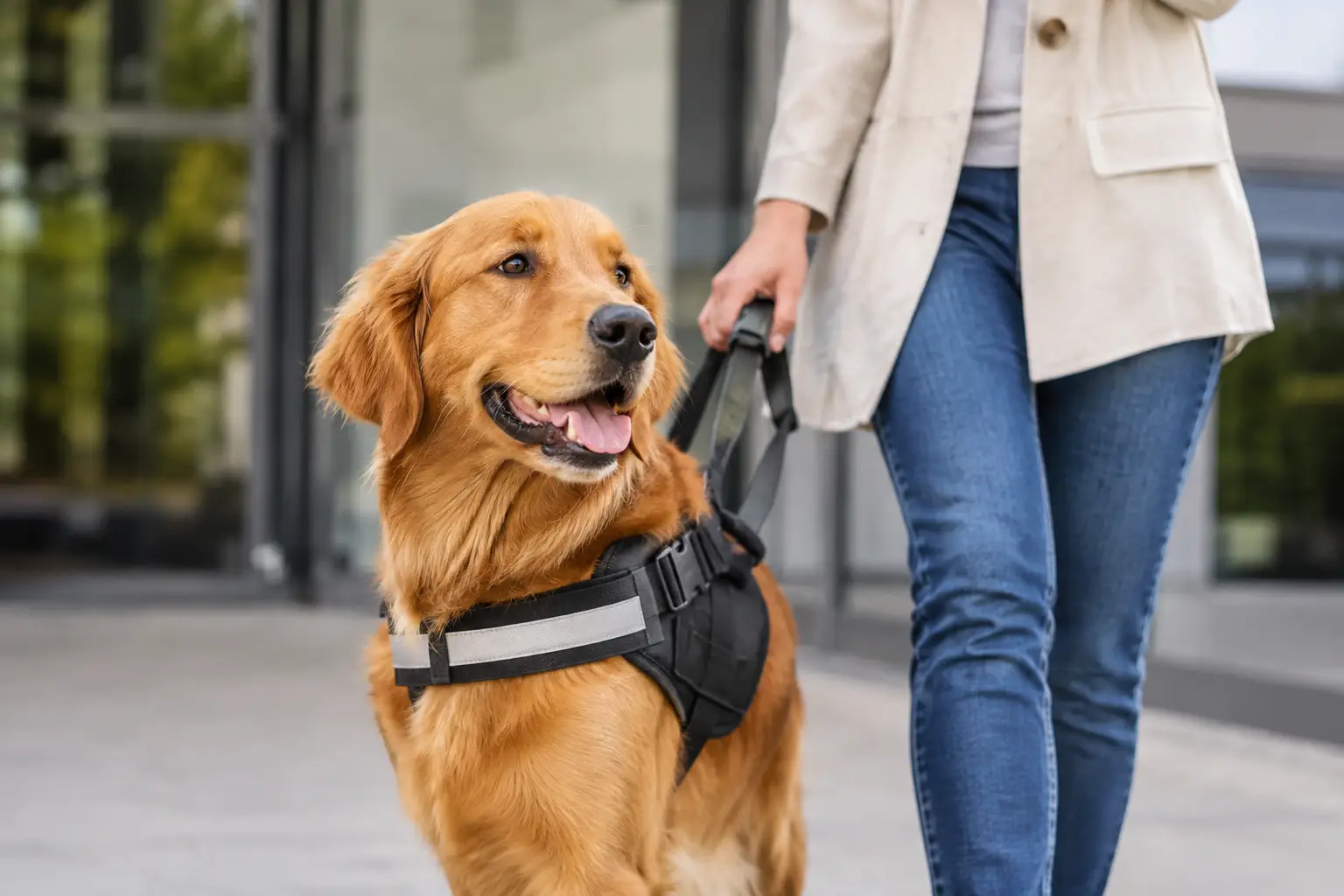
What Service Animal Registration Laws Actually Say
A card, vest, tag, or online record can make it easier to identify your working dog in a busy moment. But service animal registration laws do not create a federal registration requirement for public access. For handlers, that distinction matters: organized documentation can be useful, while your dog’s access rights come from qualifying under the law, not from purchasing a certificate.
The practical goal is to be prepared without relying on paperwork that a business is not legally entitled to demand. A clear understanding of the rules can reduce confusion when you are traveling, entering a store, or handling day-to-day activities with your task-trained service dog.
What Federal Law Says About Registration
Under the Americans with Disabilities Act, or ADA, a service animal is generally a dog individually trained to do work or perform tasks for the benefit of a person with a disability. The work or task must be directly related to the person’s disability. Guiding a person who is blind, alerting to sounds, retrieving medication, interrupting certain psychiatric symptoms, providing mobility support, and alerting to a medical episode are examples of tasks that may qualify.
The ADA does not require handlers to register a service dog with the federal government, carry an ID card, wear a vest, or show proof of training. There is no official federal service dog registry that grants public-access rights.
In limited circumstances, miniature horses may also be considered under separate ADA provisions. For most handlers and most registration discussions, however, the focus is on task-trained service dogs.
Emotional support is not the same as task-trained service work
Emotional support animals can provide meaningful comfort and support. Still, comfort alone does not meet the ADA definition of a service animal. The dog must be trained to take a specific action when needed because of a disability.
For example, a dog that senses an oncoming panic attack and is trained to lead its handler to an exit may perform a qualifying task. A dog whose presence is calming, but that has not been trained to perform a disability-related action, is not a service animal under the ADA’s public-access rules.
This difference protects the clarity of the law and helps businesses understand why a trained service dog should not be treated like a pet.
What Businesses May Ask Under ADA Rules
When it is not obvious why a dog is present, staff at a public-facing business may ask two questions. They may ask whether the dog is required because of a disability and what work or task the dog has been trained to perform.
They may not require a registration number, demand medical documentation, ask for a demonstration of the task, or ask about the nature of the handler’s disability. A handler is not required to disclose a diagnosis to establish that their dog is a service animal.
That does not mean every dog must be admitted in every circumstance. A business can ask that a service dog be removed if the dog is out of control and the handler does not take effective action, or if the dog is not housebroken. The handler must still be offered goods or services without the dog present when that is possible.
Public access also does not remove the handler’s responsibility for the dog’s behavior, care, and control. A reliable service dog should be under control through a leash, tether, or effective voice or signal control when a leash or tether would interfere with the dog’s work.
Why State Service Animal Registration Laws Can Be Confusing
Federal ADA rules establish the baseline for many public places, including stores, restaurants, hotels, theaters, and many service providers. States and local governments may have additional service-animal laws, including rules that address misrepresentation, interference with a service dog, or access in settings governed by state law.
Those laws can vary. Some states impose penalties for falsely representing a pet as a service animal. Others may use terms that differ from the ADA or provide separate protections for handlers in particular situations. A state may offer broader protections in some areas, but it cannot require an ADA-qualified service dog to be entered in a registry as a condition of ADA public access.
Because rules can change and specific situations differ, handlers should check current requirements in the states where they live or travel, especially for employment, housing, schools, and transportation. These areas may be governed by laws other than the ADA.
Travel, housing, and work involve separate rules
A common source of frustration is assuming one set of rules applies everywhere. It does not.
Air travel is governed by Department of Transportation rules, and airlines may require specific service animal air transportation forms. Those forms are not a service dog registration and are separate from an ID card or private registry.
Housing requests are generally addressed under fair housing laws. A housing provider may request reliable information when a disability or disability-related need is not readily apparent, subject to applicable rules. The ADA’s two-question rule for public businesses is not automatically the standard in housing.
Employment situations may involve reasonable-accommodation processes under employment law. An employer can have a more individualized discussion about the accommodation request and may seek appropriate supporting information in certain circumstances.
Where Voluntary Registration Fits
A private registration is voluntary documentation. It does not certify a dog, establish legal status, replace training, or require a business to grant access. It also should never be used to present an untrained pet or emotional support animal as a service dog.
Used appropriately, a private record can still be convenient. It can place key details in one organized location, such as handler information, dog information, and a description of the dog’s trained disability-related work or tasks. An ID card and tags can provide a simple visual reference when you are managing travel or everyday errands.
The value is organization and ready access to your own information, not a legal shortcut. Some handlers prefer to keep a clear record because it helps them feel prepared. Others may not need or want one. Both choices are consistent with the ADA, provided the dog meets the applicable definition and training standard.
A Simple Way to Organize Your Service Dog Information
If you decide that voluntary documentation would be helpful, focus first on accuracy. A useful record should reflect the dog’s actual training and your current contact details. Avoid services that promise official government certification or claim that registration automatically makes a dog eligible for public access.
A straightforward process can look like this:
1. Confirm that your dog is individually trained to perform disability-related work or tasks. Registration is not appropriate for pets or emotional support animals without task-specific training.
2. Gather your current handler and dog details, along with a clear description of the trained tasks. Keep the description factual and avoid sharing more medical information than you are comfortable providing.
3. Complete a registration review with a provider that clearly explains the voluntary nature of its service. Alpha Service Dog Registration uses an online inquiry followed by an in-home visit or video call, with qualifying registrations completed the same day.
4. Keep your record, ID card, and tags as an easy reference, while remembering that they do not replace responsible handling or determine ADA rights.
A record should be updated when contact information changes or when the dog retires. Treat it as an administrative file that supports your preparedness, not as a substitute for ongoing training and good judgment.
Common Questions About Service Animal Registration Laws
Do I need to register my service dog?
No. Federal law does not require service dog registration under the ADA. A voluntary private registration may help you organize identifying information, but it is not required for public access.
Can a restaurant require my service dog’s ID card?
No. If the reason for the dog is not apparent, restaurant staff may ask the two permitted ADA questions. They cannot require an ID card, registration certificate, vest, or other documentation as a condition of entry.
Does a vest make a dog a service animal?
No. Vests, patches, tags, and ID cards can help identify a working dog, but they do not create service-animal status. The dog must be individually trained to perform qualifying work or tasks for a person with a disability.
Can I register an emotional support animal as a service dog?
Not if the animal has not been individually trained to perform disability-related tasks. A registration provider should be clear about this eligibility boundary.
What should I do if someone questions my service dog?
Stay calm, answer the permitted questions if asked, and describe the dog’s trained task in plain language. You do not need to provide private medical details. If a situation becomes difficult, document what happened when you can and consider seeking guidance based on the specific setting and state involved.
Your service dog’s training, behavior, and task work remain the foundation of your rights. Voluntary documentation can be a convenient reference to carry alongside that foundation, helping you stay organized and ready for the places your day takes you.
Comments