Are Service Dog Vests Required? ADA Rules Explained
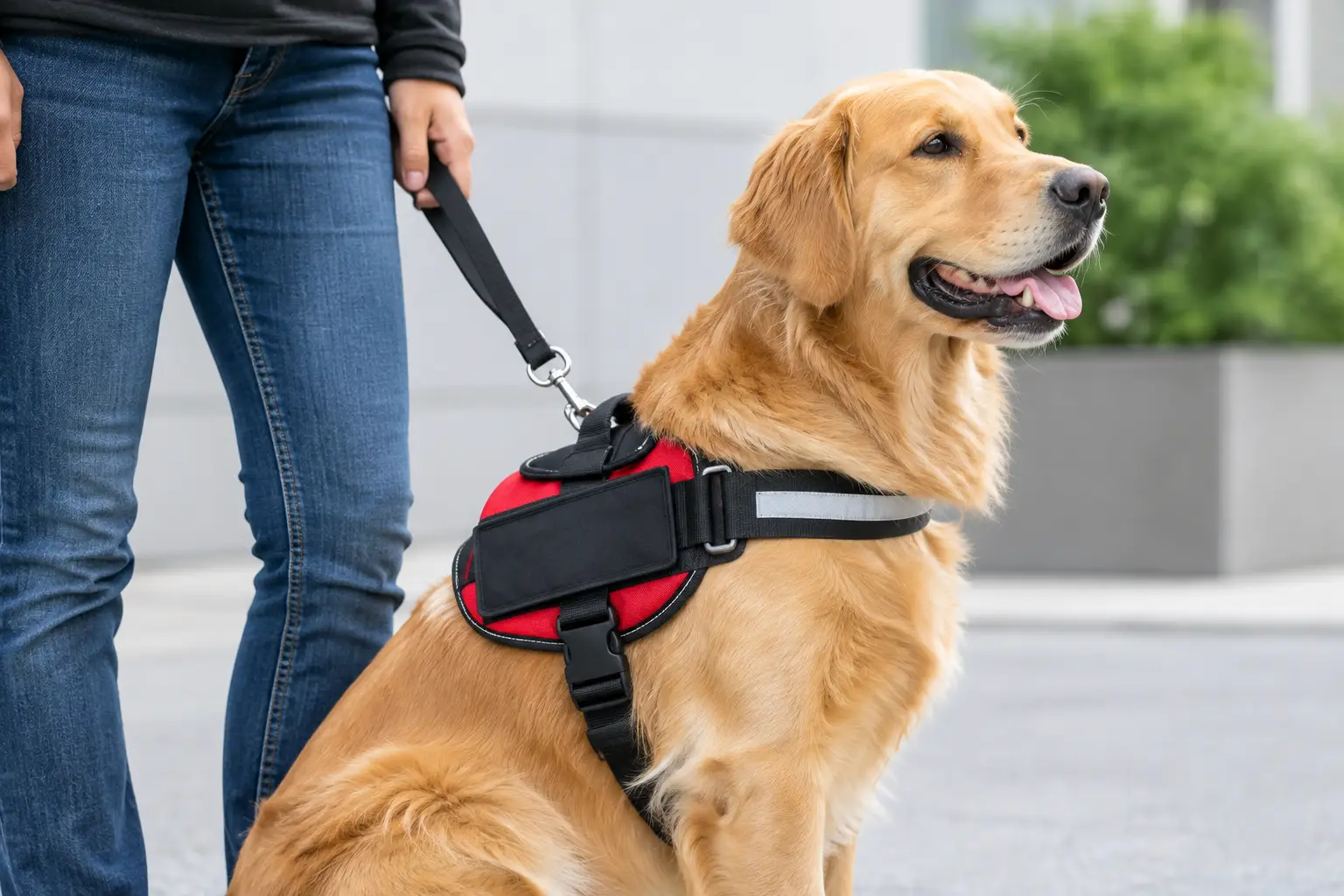
A vest can make a service dog easier to recognize in a busy airport, grocery store, medical office, or apartment lobby. But are service dog vests required? Under the Americans with Disabilities Act (ADA), the answer is no. A task-trained service dog does not need to wear a vest, patch, tag, ID card, or other identifying item to have public-access rights under the ADA.
That distinction matters because service dog handlers often face conflicting advice. Identification can be useful as a practical convenience, but it is not legal proof of a dog's status, and purchasing a vest does not make a dog a service dog. The dog's training and disability-related work or tasks are what matter.
Are Service Dog Vests Required Under the ADA?
No. The ADA does not require service dogs to wear a specific vest, harness, collar, badge, registration tag, or identification card. It also does not require handlers to place their dog in a private registry or carry certification paperwork to enter public places covered by the ADA.
A service dog is generally a dog individually trained to do work or perform tasks for the benefit of a person with a disability. The task must be directly related to the person's disability. For example, a dog may guide a person who is blind, alert to sounds, retrieve medication, provide mobility support when trained to do so safely, interrupt certain psychiatric symptoms, or alert to a medical change.
Comfort alone is not a trained task under the ADA. A dog whose sole function is emotional support, companionship, or a calming presence does not become a service dog simply by wearing a vest or carrying an ID card.
Why Many Handlers Still Choose a Service Dog Vest
Although a vest is optional, many handlers decide that visible identification makes daily interactions less stressful. A simple vest or harness can signal that a working dog should not be petted, fed, called to, or otherwise distracted. It may also help the public understand why the dog is accompanying its handler in a space where pets are not normally allowed.
For some teams, clear identification creates a smoother first impression. A handler may prefer a vest while traveling, attending appointments, visiting stores, or navigating crowded environments where questions and interruptions are more likely. The benefit is practical communication, not an added legal right.
There are trade-offs. Some dogs work comfortably in a vest, while others may do better with a lightweight harness, a collar tag, or no visible gear beyond a leash. A vest should fit well, avoid overheating, and allow the dog to move naturally while performing trained tasks. If a piece of equipment interferes with the dog's work, comfort, or safety, it may not be the right choice for that team.
What Businesses May Ask Instead of Requesting a Vest
When it is not obvious what service a dog provides, staff at ADA-covered businesses may ask only two questions:
1. Is the dog required because of a disability?
2. What work or task has the dog been trained to perform?
Staff may not require the dog to demonstrate its task. They also may not ask about the handler's diagnosis, demand medical records, or insist on a vest, registration certificate, or ID card as a condition of entry.
The handler remains responsible for the dog's behavior. A service dog should be under control, typically using a leash, harness, or tether unless those devices interfere with the service dog's work or the handler's disability prevents their use. The dog should also be housebroken. A vest does not excuse disruptive behavior, and a business may address a dog that is out of control or not housebroken, even if the dog is a legitimate service dog.
Voluntary Identification Is Different From ADA Access Rights
It is understandable to want an organized way to carry service-dog information. A voluntary registration record, identification card, and tags can give a handler an easy reference when managing travel, daily errands, or questions from others. These materials may help identify the dog as part of a working team and keep important details in one place.
Still, voluntary documentation does not create, grant, or determine ADA access rights. No private company can certify a dog into ADA public access. A vest and registration materials are best viewed as convenience tools for an eligible handler with a task-trained service dog, not as a substitute for training or a guarantee that no one will ask questions.
Alpha Service Dog Registration offers a voluntary, organized record for handlers of eligible task-trained service dogs. The process is designed to provide convenient identification and an accessible reference while being clear that registration is not required under the ADA and does not establish legal access rights.
When Documentation May Be Useful
The ADA public-access rules are not the only rules a handler may encounter. Travel, housing, employment, education, and state or local regulations can involve different agencies and different requirements. A vest is not a universal solution in any of these settings.
For example, air travel may involve airline procedures and federal forms for service animal transportation. Housing providers may have their own process for evaluating accommodation requests, particularly when a disability or disability-related need is not readily apparent. Employers and schools may engage in an interactive process to consider accommodations. In each situation, the relevant organization may have rules that differ from everyday ADA public access.
Keeping accurate information organized can reduce last-minute stress. It is wise to maintain current veterinary and vaccination records where needed, training details for your own reference, and any paperwork required for a particular travel, housing, school, or workplace process. Those records serve a different purpose from a service dog vest.
A Simple Way to Decide Whether a Vest Is Right for Your Dog
A vest is a personal and practical choice. Before buying one, consider whether it supports your dog's comfort and your routine. A useful approach is to think about four questions:
1. Does the vest fit comfortably without restricting movement or causing heat buildup?
2. Will it help reduce distractions or make public outings easier to manage?
3. Can your dog still perform trained tasks safely while wearing it?
4. Are you relying on the vest for convenience rather than treating it as legal proof?
If the answers support your needs, a vest may be worthwhile. If not, your dog can still work without one. The focus should remain on task training, responsible handling, and the dog's welfare.
Common Questions About Service Dog Vests
Can a business deny entry because my service dog is not wearing a vest?
Under the ADA, a business generally cannot require a vest, ID card, or registration paperwork as a condition of entry for a qualifying service dog. If the dog's role is not obvious, staff may ask the two permitted questions about disability-related need and trained tasks.
Does a service dog vest prevent public access questions?
Not always. A vest may reduce confusion, but it does not eliminate questions or change what a business is legally allowed to ask. Calm, brief answers and a well-controlled dog often make interactions easier.
Are emotional support animals required to wear vests?
No federal ADA rule requires emotional support animals to wear vests. More importantly, a vest does not give an emotional support animal service-dog status or ADA public-access rights. Rules for emotional support animals may differ in housing and other contexts.
Should a service dog wear a vest on an airplane?
That depends on the airline's current procedures and your dog's comfort. Airlines may have rules about forms, behavior, size, and placement during the flight, but a vest itself is not what establishes eligibility. Check the airline's requirements before travel rather than relying on gear alone.
A vest can be a helpful signal, an ID card can be a convenient reference, and an organized record can make preparation feel more manageable. But the strongest foundation for every outing is still the same: a trained dog, a handler who understands the rules, and a team prepared to move through the day with confidence.
Comments