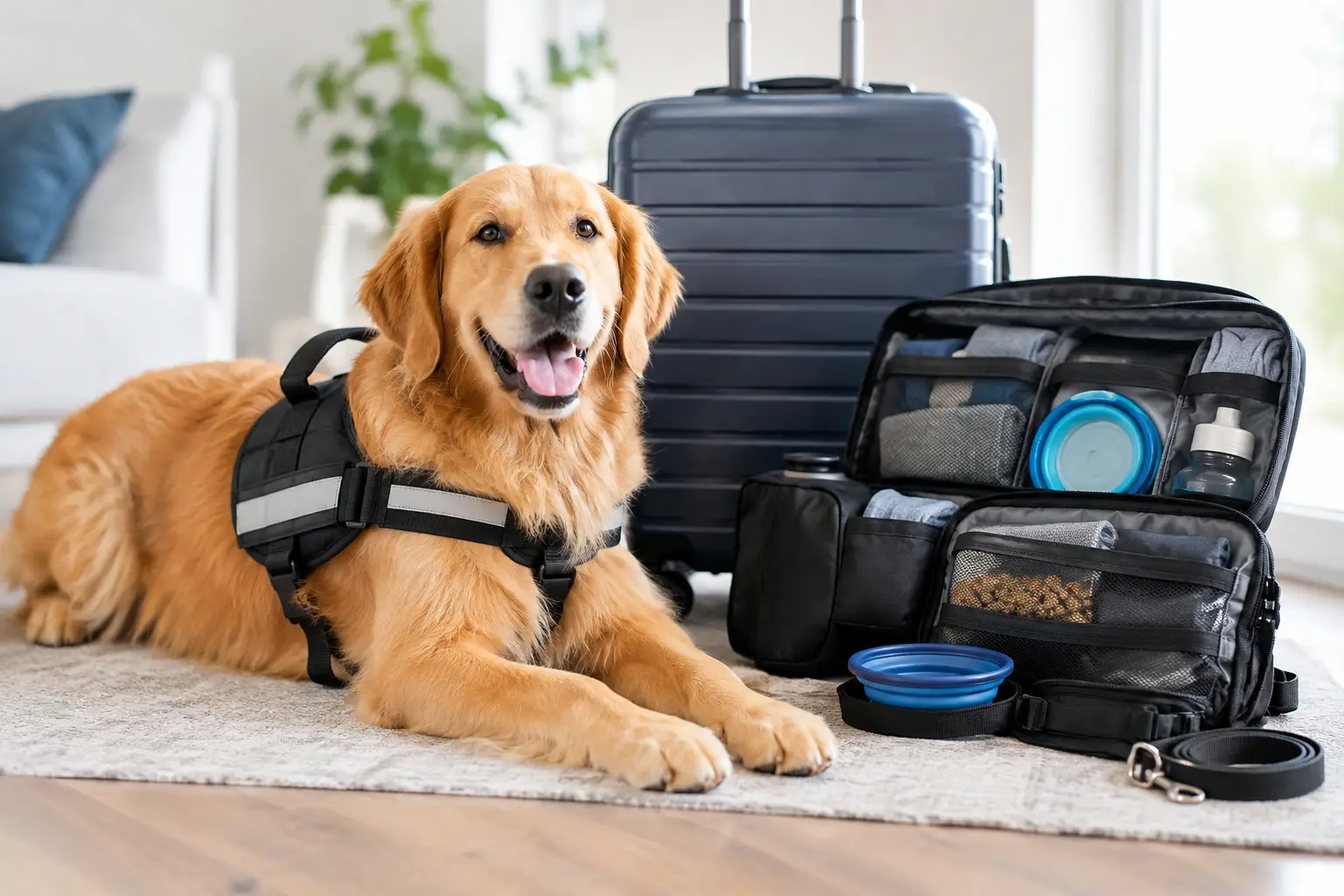
Service Dog Travel Organizers That Keep You Ready
A missed connection, a long security line, or a hotel check-in can turn one loose paper into a stressful search. Service dog travel organizers give handlers one dependable place for the information and supplies that make travel more manageable. The goal is not to carry more. It is to know exactly where essential items are when you need them.
For a handler traveling with a task-trained service dog, organization supports independence. A thoughtfully packed travel system can keep routine care on track, protect important records, and reduce the number of decisions you have to make when plans change.
What service dog travel organizers should do
The best organizer is not necessarily the largest bag or the one with the most compartments. It should match the way you travel and allow you to reach needed items without unpacking everything in a lobby, airport, or vehicle.
For many handlers, a small zippered document case inside a personal bag works well for records, while a separate, washable supply pouch holds food and care items. Others prefer one structured tote with labeled sections. If you use a wheelchair, cane, or other mobility equipment, consider how the organizer will attach, rest, or move with you. A bag that is difficult to carry is not a convenient solution, even if it holds every possible item.
Prioritize a design that is easy to open, durable, and simple to clean. Water-resistant material can be useful for outdoor travel or unexpected spills. Clear pockets make documents easier to locate, but opaque pockets offer more privacy. The right choice depends on your comfort level and whether you are traveling for an afternoon, a road trip, or several days.
Build a travel file you can reach quickly
Your document section should contain practical information, not a stack of paperwork that is hard to sort through. Keep documents current and store originals safely at home when a copy will serve your travel needs.
A useful travel file may include your dog’s vaccination record, veterinary contact information, medication details, microchip information, and a recent photo of your dog. If you are flying or staying overnight, it can also help to keep reservation details, your destination address, and emergency contacts in the same place.
Handlers may choose to carry a voluntary private registration record, ID card, or identification tags as a convenient reference. Alpha Service Dog Registration provides a structured record containing handler and dog details and the dog’s trained disability-related work or tasks, along with an ID card and registration tags for qualifying task-trained service dogs.
Keep the legal boundary clear: private registration, identification cards, tags, and online records are voluntary. They do not grant access rights or determine whether a dog qualifies as a service animal under the Americans with Disabilities Act. Under the ADA, a service animal is a dog individually trained to do work or perform tasks for the benefit of a person with a disability. Pets and emotional support animals without task-specific training do not meet that definition.
Having an organized reference can still be useful for your own planning. It may help you quickly confirm your veterinarian’s phone number, replace a lost tag, or share relevant information during an emergency. It should not be treated as a substitute for understanding your rights and responsibilities as a handler.
Keep task information private but available
You do not need to display detailed medical information on the outside of a bag. In fact, many handlers prefer not to. A brief, private task summary can be kept in an internal pocket for your own reference, especially if another trusted person may assist with your dog’s care during travel.
Use language that is accurate and specific to your dog’s training. Avoid broad claims or descriptions that do not reflect the work your dog actually performs. Accuracy protects your records and makes them more useful when you genuinely need them.
Organize care supplies by when you will use them
The fastest way to make a travel organizer frustrating is to put routine supplies, emergency supplies, and daily food all in one unmarked compartment. Divide items by purpose so you can find what you need with one hand and minimal attention.
Your quick-access pouch can hold a collapsible bowl, a measured portion of food or treats, waste bags, wipes, and a small towel. Keep this pouch near the top of your bag. It is the section you are most likely to use at a rest stop, gate area, or before entering a building.
A separate care pouch can hold medications, a copy of dosing instructions, a spare leash or connector, grooming essentials, and any items your dog needs to work comfortably. If your dog wears boots, protective gear, or a cooling item in certain weather, pack those based on the destination rather than carrying them on every trip.
For longer travel, plan for delays. Pack more food and medication than the exact amount your itinerary requires when practical. A delayed flight or closed highway can turn a simple day trip into an overnight situation. Rotate food and check expiration dates after each trip so supplies remain fresh.
Use a simple packing process before every trip
A repeatable routine is more reliable than packing from memory. The same process can work whether you are leaving for an appointment or taking a cross-country flight.
1. Check the trip details. Confirm how long you will be away, expected weather, transportation rules, and whether your dog will have regular relief opportunities.
2. Refresh the document file. Verify that your contact information, veterinary details, and medication information are current. Make sure your phone is charged and that key information is also accessible without relying only on an app.
3. Pack daily supplies first. Add food, water access, waste bags, and any working equipment your dog uses every day. Then add destination-specific items, such as a rain cover or extra towel.
4. Create a small contingency section. Include a backup supply of food, medication if appropriate, and a few essentials for an unplanned delay. Keep it separate so it is not used accidentally during the first part of the trip.
5. Place the organizer where you can reach it. Do not bury it beneath luggage. In a car, secure it where it will not slide around. On a plane, keep the most important items in your personal item rather than checked baggage.
Plan for different types of travel
A road-trip organizer should be built around frequent access. You may need water, cleanup supplies, and weather items several times a day. A soft-sided bag that fits near your seat can be more useful than a hard case stored in the trunk.
Air travel calls for a more compact system. Keep essential supplies within airline carry-on limits and use smaller containers when possible. Check current carrier requirements before departure because policies can vary. If you are bringing food or medication, allow extra time for screening and keep relevant details easy to locate.
For hotel stays, create a temporary routine as soon as you arrive. Place food in one location, set up water, identify the nearest relief area, and return your document file to the same pocket after checking in. Consistency helps both you and your dog settle into an unfamiliar space.
Review after you return
A five-minute review can improve every future trip. Replace used supplies, wash bowls and pouches, and make a note of anything you wished you had packed. If you had trouble reaching an item, move it to a more accessible compartment next time.
Service dog travel organizers are most helpful when they reflect your real routine, not a generic packing list. Start with the information and supplies you use most, keep them together, and adjust the system until it feels easy to maintain. When travel becomes unpredictable, a well-organized bag gives you one less thing to manage.
Comments