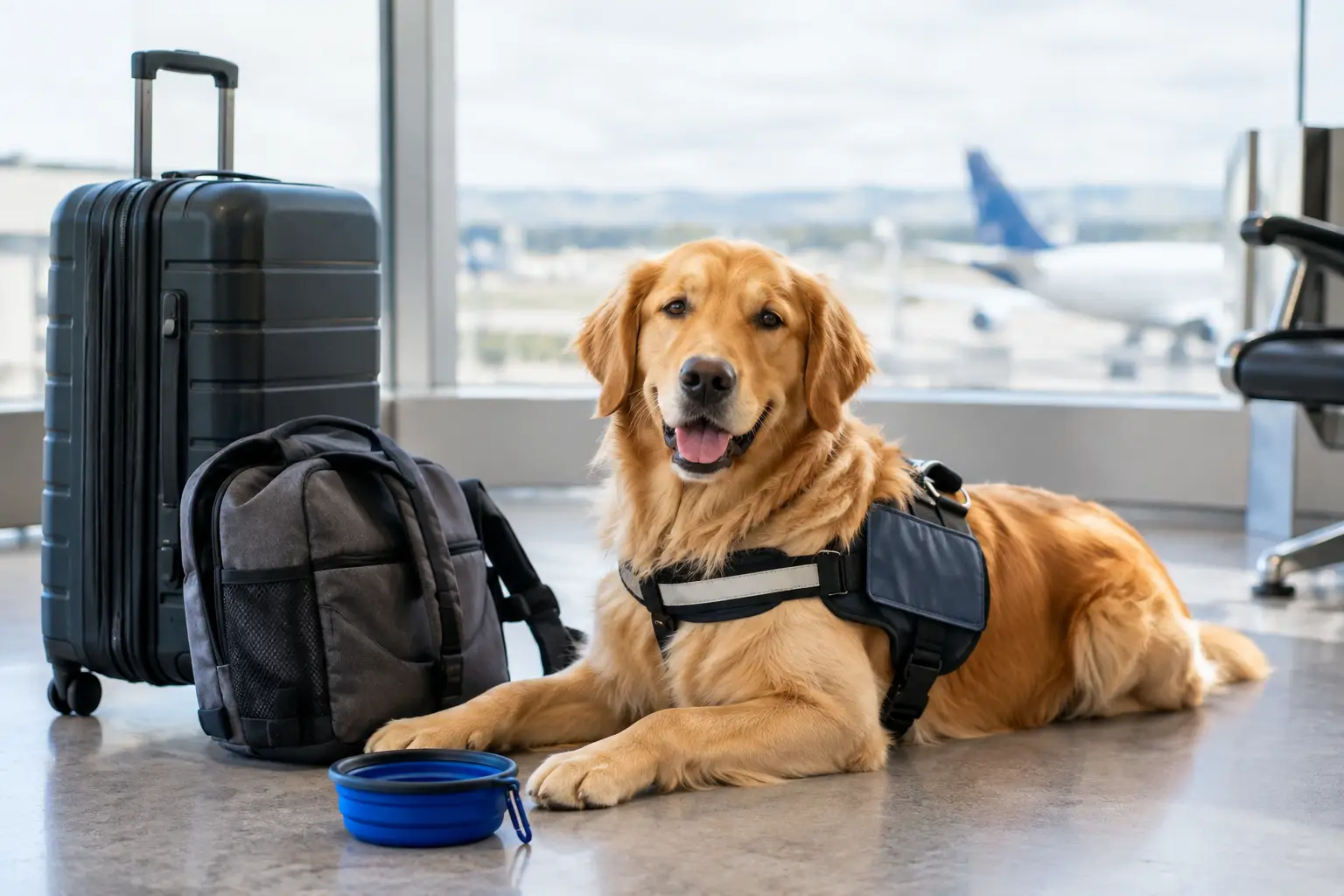
Service Dog Travel Record Example and Checklist
A delayed flight, a hotel check-in, or a long drive is not the time to search through photos, emails, and veterinary paperwork. A clear service dog travel record example gives you one organized place to keep the information you may need before leaving home. It is a practical reference for you, not a substitute for the rules that apply to service dogs in public places or during air travel.
For handlers of task-trained service dogs, a travel record can reduce last-minute stress. The goal is simple: keep accurate details about your dog, your travel plans, and any separate carrier or destination requirements available when you need them.
What a Service Dog Travel Record Is - and Is Not
A travel record is a personal document folder or organized registration record that helps you identify your service dog and keep relevant details together. It may include your dog's description, handler contact information, trained disability-related tasks, vaccination records, and trip-specific confirmations.
It is not an ADA certification, government license, or guarantee of access. Under the Americans with Disabilities Act, businesses generally cannot require registration, an ID card, or a medical letter as a condition of entry with a service dog. A private registration also does not determine whether a dog qualifies as a service animal under the ADA.
That distinction matters. A well-organized record can be convenient for a handler, but it should never be presented as proof that overrides airline policies, hotel policies, local rules, or the legal definition of a service animal. Emotional support animals and pets that have not been individually trained to perform disability-related work or tasks are not service dogs under the ADA.
Service Dog Travel Record Example
Your record does not need to disclose your diagnosis or more personal information than you are comfortable carrying. The most useful version is clear, current, and limited to details that help you manage travel.
Handler and Dog Identification
Handler name: Jordan M. Preferred contact number: (555) 014-2288 Emergency contact: Taylor M., (555) 014-1140 Service dog name: Maple Breed/type: Labrador Retriever mix Color and markings: Yellow coat, white patch on chest Date of birth: March 12, 2022 Microchip number: Kept in secure veterinary record Veterinary clinic: Northside Animal Clinic, phone number saved in contacts
Task Training Summary
Disability-related work or tasks: Maple is individually trained to interrupt escalating panic behaviors by nudging and applying trained deep pressure therapy on cue. Maple is also trained to retrieve a phone during an episode.
This section should describe trained work or tasks, not a diagnosis. Keep the wording factual and specific. Avoid broad phrases such as “provides comfort” or “helps with anxiety” unless the dog has been trained to take a particular action that mitigates a disability-related need.
Travel Details
Trip dates: June 10-16 Destination: Denver, Colorado Transportation: Airline reservation confirmation stored with travel documents Lodging: Hotel confirmation number stored with travel documents Emergency veterinary clinic near destination: Address and phone number saved before departure Daily care notes: Feeding schedule, medication instructions, relief routine, and backup food location
Documents Kept With the Record
The folder also includes current rabies vaccination information, a recent photo of Maple, the airline-required service animal form if flying, and copies of any destination-specific animal health requirements. Jordan keeps originals secure and carries only the information needed for the trip.
This example is intentionally straightforward. Your own record may be digital, printed, or both. A phone folder is convenient, while a slim paper copy can be helpful if your battery is low or you do not have service.
What to Include Before You Travel
The right paperwork depends on how you are traveling and where you are going. For a road trip within your state, your main focus may be your dog's health information, routine, and emergency contacts. For air travel or interstate travel, check the specific requirements well before departure.
Keep your record focused on four practical areas: identification, trained-task information, health records, and trip logistics. A current photo can help if you become separated. Your veterinarian's contact information and a destination emergency clinic can save time in an unfamiliar place. Food, medication, water, and relief planning matter just as much as documents.
If you fly, do not assume that a registration card or travel record is all an airline needs. Airlines may require a Department of Transportation service animal form and may have deadlines, behavioral expectations, and rules for the dog's placement in the cabin. Review the carrier's requirements directly before booking and again shortly before your trip, since policies can change.
For international trips, the preparation can be more involved. Entry rules may include health certificates, vaccination timing, import permits, or quarantine requirements. Begin early and verify the rules for both your destination and your return to the United States.
How to Build a Travel Record in Five Steps
1. Start with current dog and handler details. Confirm your contact information, your dog's identifying description, and a recent photo. If you use a microchip, keep the number in a secure location.
2. Write a concise task summary. List only the specific work or tasks your dog has been individually trained to perform because of your disability. You do not need to place private medical details in a general travel folder.
3. Separate health and travel documents. Add vaccination records and veterinary contacts, then place airline forms, lodging confirmations, and destination requirements behind them. Keeping categories separate makes updates easier.
4. Prepare a digital backup. Store readable scans in a password-protected folder on your phone or secure cloud storage. Make sure essential confirmations are available offline.
5. Review the record before every trip. Check expiration dates, airline deadlines, food and medication supplies, and contact numbers. A record is only useful if the information is current.
A voluntary registration package can also serve as an organized reference for qualifying handlers. Alpha Service Dog Registration collects handler and dog information, along with the dog's trained disability-related work or tasks, and provides an ID card and registration tags. Registration can be completed through an inquiry followed by an in-home visit or video call, with qualifying registrations processed the same day. It remains a private documentation service, not an ADA requirement or access determination.
Using Your Record During Travel
Your travel record is best used as your own preparation tool. At a hotel or other public accommodation, staff may ask the limited questions permitted under the ADA when the need for the dog is not obvious: whether the dog is required because of a disability and what work or task the dog has been trained to perform. They generally may not require you to show a card, certificate, registration, or medical documentation.
A calm, direct response is usually more helpful than offering a stack of papers. Your dog should also be under control, housebroken, and managed in a way that does not fundamentally alter the service being provided. Documentation does not excuse disruptive behavior or replace responsible handling.
For air travel, follow the airline's process rather than relying on general assumptions. Have required forms completed on time, arrive with enough time for check-in, and make a realistic plan for your dog's comfort and relief needs. If you are traveling with medication or supplies, keep them accessible rather than packed at the bottom of a suitcase.
Common Record-Keeping Mistakes
The first mistake is treating a travel record as legal proof of access. It is not. Its value is organization and convenient identification for the handler.
The second is including outdated vaccination information or old phone numbers. Set a reminder to review your folder after veterinary visits, address changes, and new training milestones.
The third is carrying unnecessary private medical information. A concise task description is often enough for your own reference. Protecting your privacy can make the record easier to use and safer to carry.
Finally, avoid waiting until the day before travel to check carrier or destination requirements. Even a perfectly organized record cannot make up for a missed airline form deadline or an overlooked health certificate requirement.
A well-prepared travel record gives you a quieter kind of confidence: your service dog's essential information is organized, your plans are checked, and your attention can stay on getting where you need to go.
Comments