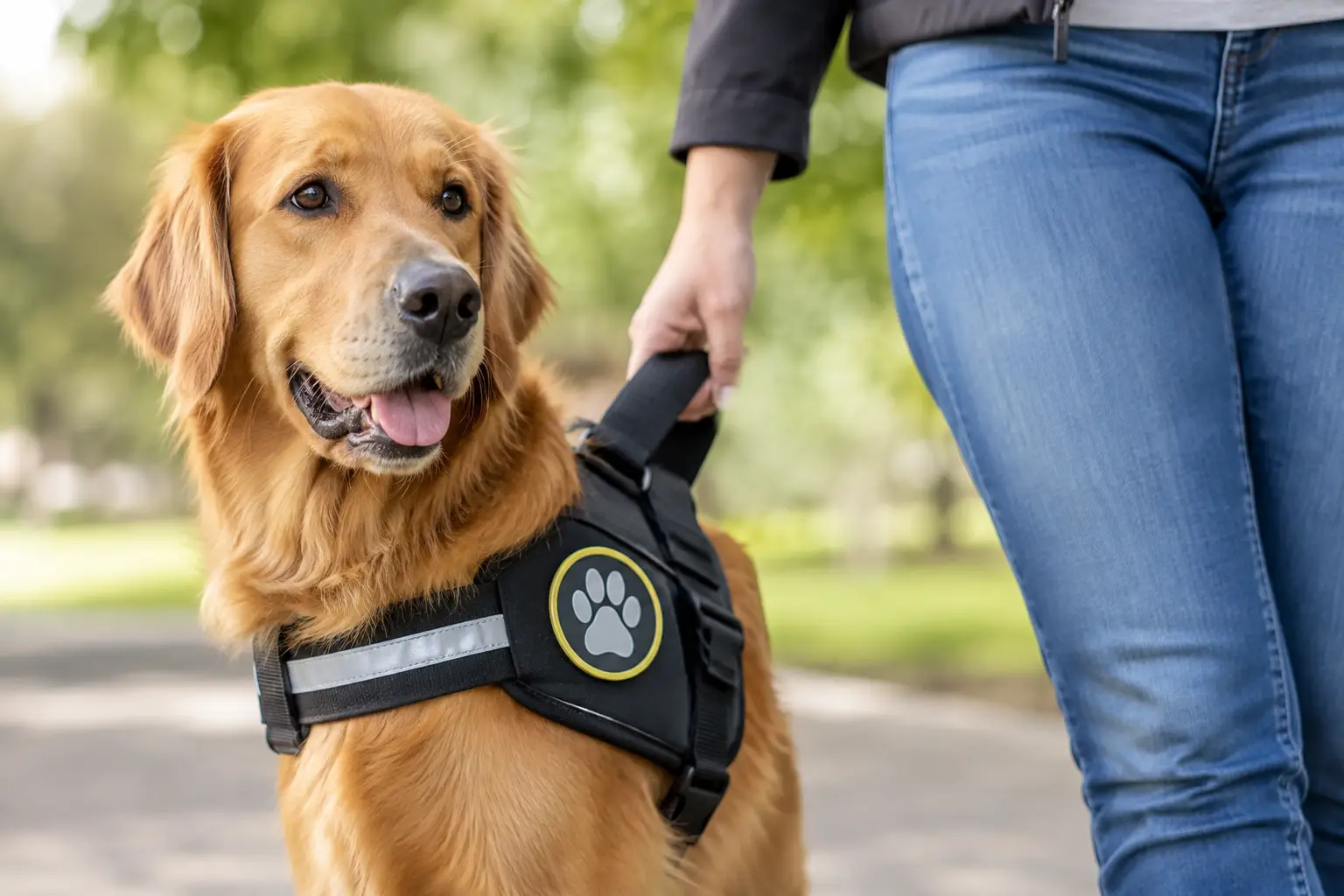
What Service Dog Badges Can and Cannot Do
A service dog can be working quietly beside a handler and still draw questions in a store, hotel lobby, airport, or other public setting. Service dog badges give handlers a convenient way to identify a trained working dog and keep key information close at hand. They can reduce everyday friction, but they are not a legal certification, a substitute for training, or a guarantee of access.
For handlers who value being organized and prepared, a badge can be part of a practical documentation plan. The value is not in making a dog look official. It is in having a clear, portable reference that supports an already task-trained service dog.
What Are Service Dog Badges?
Service dog badges are identification items that indicate a dog is a service dog. Depending on the registration provider and package, they may include a photo ID card for the handler, a badge or card with the dog's name and registration details, and identifying tags for the dog's collar, harness, or vest.
A well-organized badge or ID card generally presents simple, useful information: the handler's name, the dog's name, a photo, an identification number, and contact details or registry information. This gives a handler an easy reference during daily activities, travel, or situations where they want to communicate that the dog is working.
The best identification materials are clear and professional without revealing more personal medical information than the handler wants to share. A badge is meant to support convenience and organization, not require a handler to disclose a diagnosis.
What a Badge Does Not Prove
Under the Americans with Disabilities Act, service dog access is based on the dog being individually trained to do work or perform tasks that are directly related to a person's disability. The ADA does not require service dog registration, certification, an ID card, a vest, or service dog badges.
That distinction matters. A private registration and its identification materials do not grant ADA access rights, determine whether a dog qualifies as a service dog, or override the rules of a business, housing provider, airline, or other organization. A badge cannot turn a pet into a service dog, and it cannot replace the training that makes a service dog reliable in public.
In most public-access situations, staff may ask only two questions when the need for the dog is not obvious: whether the dog is required because of a disability, and what work or task the dog has been trained to perform. They generally cannot demand to see registration papers or require a badge. Still, some handlers find that carrying organized identification helps them respond calmly and quickly when questions arise.
Why Handlers Choose Identification Materials
The practical benefit of a badge is easy reference. When a handler is managing mobility limitations, medical needs, fatigue, anxiety, or a busy travel day, searching through a phone or explaining details repeatedly may be inconvenient. An ID card and tag can keep the dog's basic identifying information readily available.
Badges can also help distinguish a working dog from a pet in settings where the dog must remain focused. This does not excuse poor behavior or inadequate training. A legitimate service dog should be under the handler's control, housebroken, and able to work without creating a direct threat or substantial disruption.
For some handlers, identification is especially useful as part of a broader record. Keeping the dog's photo, handler information, trained tasks, and registration details together can make personal recordkeeping less scattered. It may also be helpful if a collar tag is lost, an emergency contact needs to identify the dog, or a handler needs a quick reference while away from home.
There is a trade-off to consider. Visible badges can invite fewer questions in some situations, but they may also draw attention to a disability that a handler would prefer to keep private. There is no single right choice. The goal is to select identification that makes the handler feel prepared, not pressured to share personal information.
When Service Dog Badges Make Sense
Badges are most useful for people with a task-trained service dog who want an organized, portable identification reference. They can be a sensible addition for handlers who travel frequently, visit new places often, or simply prefer to keep documents and dog information in one location.
They are not appropriate as a shortcut for obtaining public access. Emotional support animals, therapy dogs, and pets may provide real comfort and companionship, but they are not service dogs under the ADA unless they are individually trained to perform disability-related work or tasks for a person with a disability.
For example, a dog that comforts a person through its presence alone is not performing a trained task. A dog trained to interrupt panic-related behaviors, retrieve medication, alert to a medical change, guide a person with vision loss, or provide balance support may qualify when the work is directly related to the handler's disability. Eligibility depends on the dog’s individual training and the disability-related task, not on a badge or registry entry.
A Simple Way to Organize Your Dog's Information
A voluntary private registration can provide structure for handlers who want a consolidated record. Alpha Service Dog Registration uses an online inquiry followed by an in-home visit or video call to gather the handler and dog information needed for qualifying registrations. After the required information is collected, the registration can be completed the same day.
The process is designed to be manageable rather than burdensome:
1. Begin with an inquiry and provide the basic information requested about the handler and dog.
2. Complete an in-home visit or video call so the registration information can be reviewed.
3. Document the dog’s trained disability-related work or tasks, along with identifying details.
4. Receive the private registration record and accompanying identification materials, such as an ID card and registration tags, if included in the selected package.
Before starting, it helps to have the dog's current photo, basic contact information, and a clear description of the trained tasks available. A concise task description is usually more useful than a broad statement such as “emotional support.” Focus on what the dog is trained to do, such as retrieve a phone during an emergency or provide a specific alert.
Using a Badge Responsibly in Public
A badge works best when it supports good handling practices. Keep the dog under control, respect reasonable safety rules, and avoid presenting private documentation as if it were a government license or official ADA certification. Clear, accurate language protects handlers and helps prevent confusion for the public.
It also helps to remember that identification materials are not always necessary. If a dog’s work is obvious or the handler is comfortable answering the permitted questions, there may be no need to present an ID card. Other handlers prefer to have it ready because it reduces stress. Either approach can be reasonable.
If access is denied or a situation becomes difficult, remain calm and document what happened when possible. A badge may help communicate the dog’s role, but the strongest foundation is always legitimate task training, appropriate public behavior, and an understanding of the rules that apply to the setting.
Common Questions About Service Dog Badges
Do service dog badges give my dog public access rights?
No. ADA access rights do not come from a badge, ID card, registration, vest, or certification. They depend on whether the dog meets the ADA definition of a service animal and is appropriately controlled in the setting.
Do I have to show a badge when entering a business?
No. The ADA does not require handlers to carry or show identification. A badge is voluntary and may be used as a convenient reference if the handler chooses.
Can an emotional support animal receive a service dog badge?
A dog should not be represented as a service dog unless it is individually trained to perform work or tasks directly related to a handler’s disability. Emotional support alone does not meet the ADA service dog definition.
Should a badge include my medical diagnosis?
Usually, no. A useful badge identifies the working dog without disclosing unnecessary private medical details. Handlers can decide how much personal information they are comfortable carrying.
A service dog badge is most valuable when it matches the reality of the working partnership: a task-trained dog, a prepared handler, and clear information available when it is useful. Choose documentation that makes daily life easier while keeping the focus where it belongs - on the dog’s trained work and your independence.
Comments